Introduction
Retail glass is free advertising space. Window clings and adhesive decals can both turn it into a billboard for sales, openings, and seasonal promotions. They stay put and wear very differently.
That difference hits storefront teams where it hurts: campaign changeovers, installation effort, surface protection, durability, and long-term cost. Pick wrong and you may be scraping residue off glass or re-ordering a graphic that lifted in a month.
This guide compares the two around three questions. Is the graphic temporary or permanent? Is the glass exposed to weather or heavy cleaning? Will you need to remove or reuse it?
Key Takeaways
- Window clings hold through static contact, so they suit temporary, reusable graphics on clean, smooth glass.
- Adhesive decals use pressure-sensitive adhesive and suit long-term branding or tougher exposure.
- Campaign length, surface, exposure, and removal needs should drive the choice.
- Always check the manufacturer's rated life for your exact material.
Window Clings vs Adhesive Decals: Quick Comparison
Adhesion and construction
Clings have no pressure-sensitive adhesive. General Formulations describes its cling as soft, highly plasticized vinyl that wets smooth glass without adhesive. Decals use a glue-backed vinyl or film, such as the clear pressure-sensitive adhesive on 3M's IJ8150. Thickness and finish vary by supplier, so check the spec sheet before you order.
Surfaces and placement
Clings need clean, smooth, non-porous glass. Decals can be specified for a wider range of smooth surfaces. Dust, moisture, texture, and contamination hurt either product.
Durability and exposure
Ratings are product-specific. Here are four published examples:
| Product | Type | Manufacturer outdoor-life entry |
|---|---|---|
| GF 207 (clear, 7 mil) | Static cling | Up to 3 months |
| GF 208 (white, 7 mil) | Static cling | Up to 3 months |
| GF 206 (clear, 3 mil) | Low-tack removable PSA | Up to 3 years |
| 3M IJ8150 | Clear PSA | 7 years expected, unprinted film |
Treat these as examples, not universal numbers. Outdoor suitability depends on the exact film, ink, laminate, adhesive, and mounting position.

Removal and reuse
Clings are designed to peel off cleanly and can be reused with care. Decals are usually single-application. Removable adhesives reduce residue risk but don't make a decal reusable. Even GF 206's clean-removal rating covers only one year, and after that adhesive transfer is possible.
Cost and operational impact
Look past the purchase price. Count replacements, labor, storage, and removal. A permanent set of store hours belongs on a decal. A holiday offer that returns every year may cost less as a reusable cling.
What Is a Window Cling?
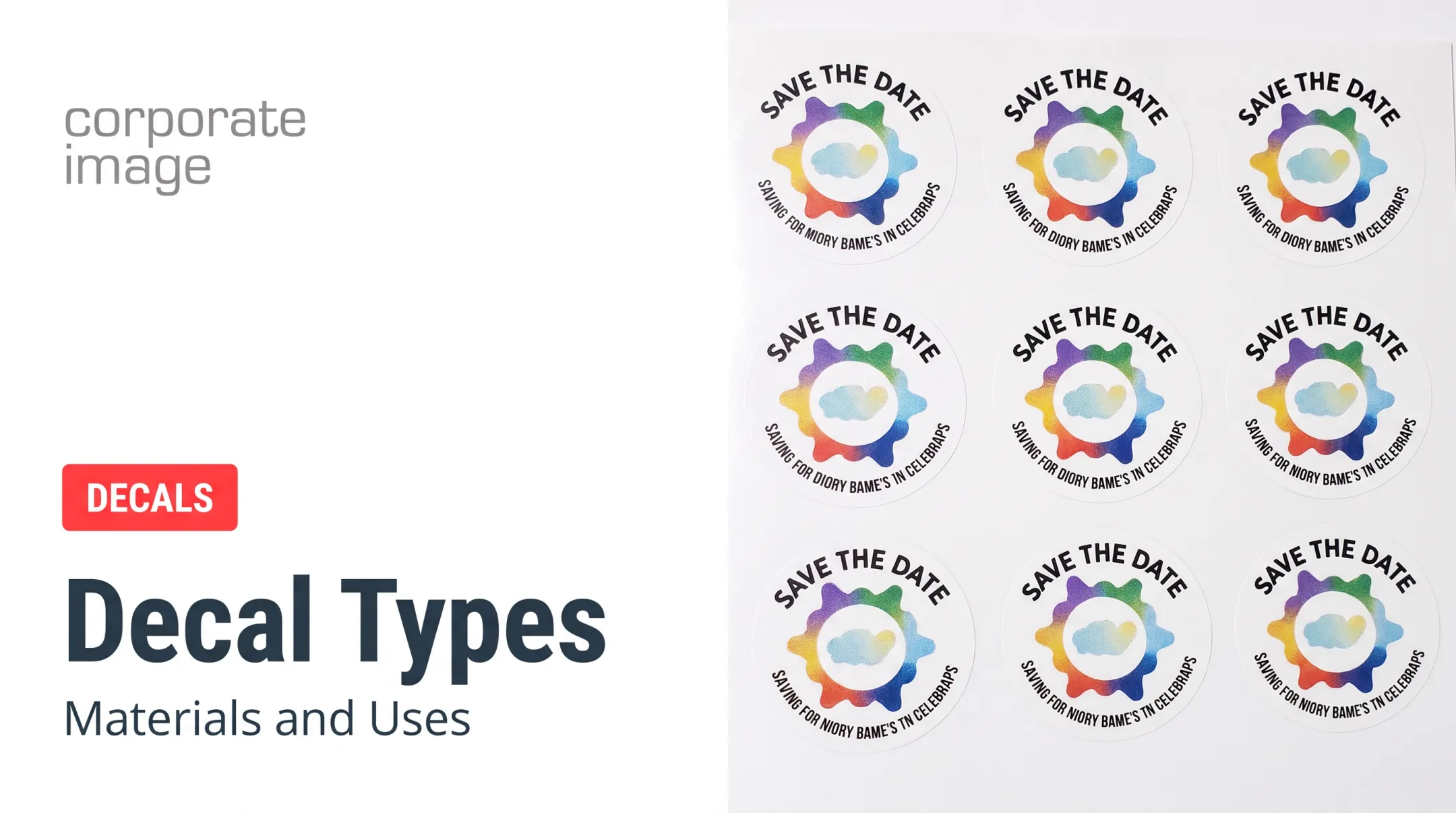
A window cling is a non-adhesive graphic that holds to smooth glass through static or surface contact. Retailers like them for fast placement, easy repositioning, and clean removal.
Limits to know
- Dust, fingerprints, and condensation weaken the hold
- Textured surfaces won't hold a cling
- Exterior wind, rain, and temperature swings limit the bond
- High-contact areas invite accidental lifting
- Existing window tint may turn brittle or chalky, per General Formulations' guidance
Format choices
- Clear or opaque: GF 207 is clear, GF 208 is white
- Reverse printing: for inside installation viewed from outside, reverse the artwork and keep the non-printed side against the glass
- White film caution: GF 208 isn't intended for inside application when read from outside
Printed-side contact with glass can transfer ink on removal. To reuse a cling:
- Peel it smoothly
- Wash the smooth side with soap and warm water
- Re-roll it onto its liner
- Store it somewhere cool and dry
No manufacturer promises a number of reuse cycles.
Use cases for window clings
Clings fit limited-time sales, grand openings, holiday promotions, and event notices. They also help multi-location brands: local teams swap messages without disturbing the permanent brand graphic or booking a full installation.
A practical setup: permanent logo and hours on the glass, with a reusable cling panel for rotating offers. Savings depend on how often you change messages, so track your own changeover time.

What Is an Adhesive Decal?
An adhesive decal is a printed graphic with a pressure-sensitive adhesive backing. "Adhesive" covers several specs: removable, repositionable during installation, and permanent. 3M Controltac 40C, for example, can be slid and repositioned only until firm pressure is applied. ORACAL 8510 is a permanent option for shop windows and doors.
Decals suit logos, brand lettering, hours, door graphics, and identification that must stay aligned for a long time.
Format options
- First surface: applied outside, exposed to weather and damage
- Second surface: applied inside, facing out, protected behind the glass
- Frosted: ORACAL 8510 gives an etched-glass look for shop windows and doors. It's decorative, not a privacy treatment.
Mirrored printing on clear film is a common second-surface build, per Drytac's guidance.
Durability and installation
Sun, weather, cleaning chemicals, abrasion, and entrance traffic all test a decal. Preparation matters. 3M's building-window bulletin calls for a lint-free towel with 70% isopropyl alcohol and 30% water. Coatings on glass can interfere with adhesion, and some can't be removed.
Repositioning is limited once the adhesive touches glass. Large panels, coated glass, or tricky alignment call for a professional. Corporate Image is a 3M Certified Graphics Installation Company. Simple decals can work as DIY; large, coated, irregular, or specialty-material jobs usually need a pro.
Use cases for adhesive decals
- Long-term storefront branding, logos, and business hours
- Door lettering and compliance messaging
- Second-surface graphics that need protection from weather and customer contact
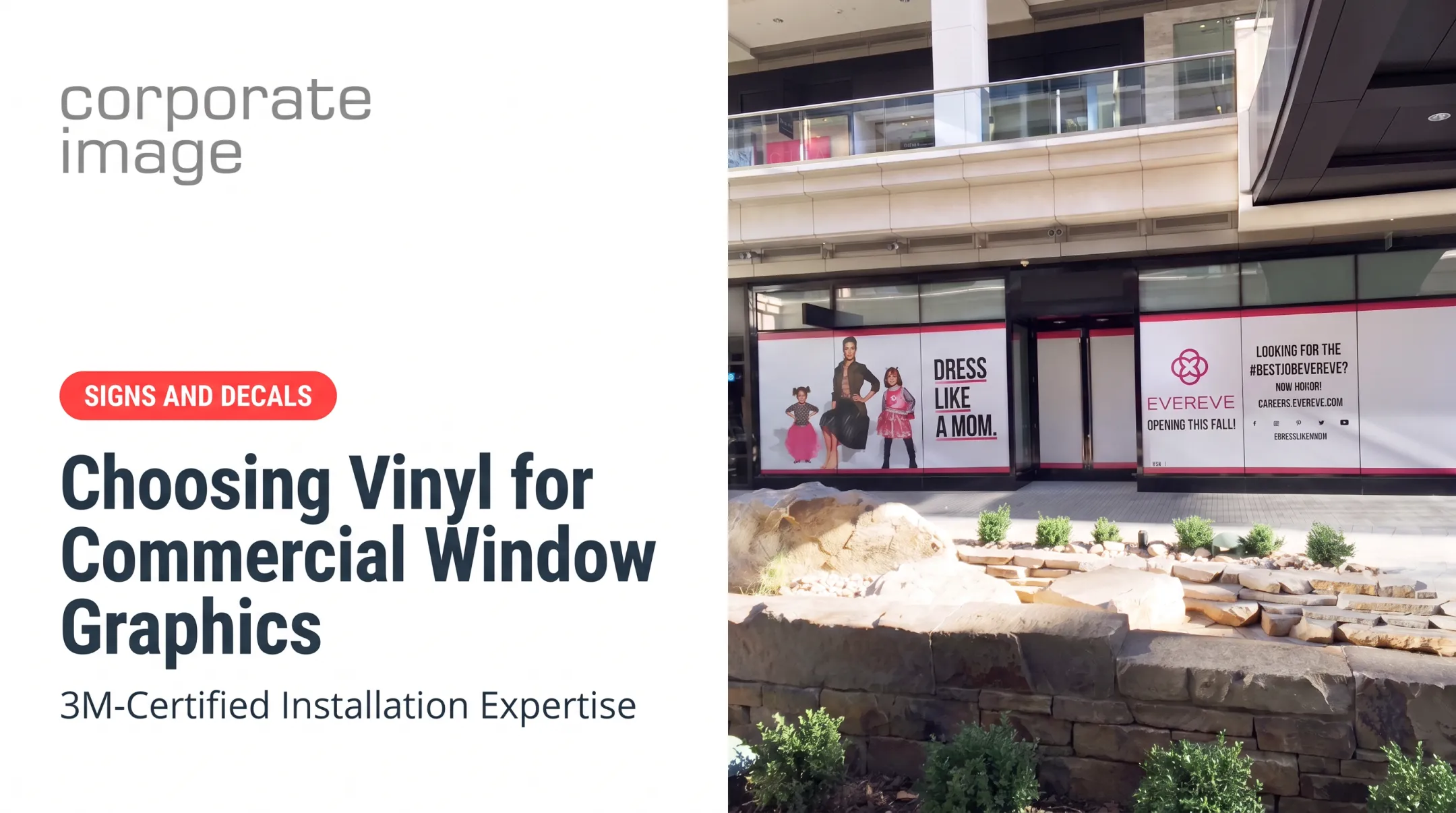
- Large glass areas with perforated film (such as 3M 8170-P50, 50% open) that keep partial visibility
Check local building, safety, and visibility rules first. San Francisco, for example, caps window signs at one-third of ground-floor window area in certain districts. Rules vary by city.
Window Clings vs Adhesive Decals: What Is Better for Retail Graphics?
Decide in this order: glass condition first, then how long the graphic stays, how often the message changes, and how much exposure it gets.
Choose window clings when:
- The graphic is temporary
- The glass is smooth and clean
- Clean removal matters
- You can store the graphic between uses
Choose adhesive decals when:
- The message is long-term
- You need a secure bond
- Exposure or surface exceeds cling limits
- You want minimal changeover
Cost, design, and combining both
Total cost depends on more than unit price:
- Campaign frequency and labor
- Replacement cycles and storage
- Removal and repairs after a failed graphic
Neither option wins on cost in every case, so run the numbers for your own calendar.
Design matters too. Clear, opaque, frosted, white-ink, reverse-printed, and die-cut options change legibility from the street. Dark ink and high-opacity areas absorb heat. 3M warns against those constructions on glass with heavy sun exposure, since thermal stress can crack glass.
Most retailers do best using both: decals for permanent identity, clings for rotating offers.

Real-world examples
Manufacturer case studies show what professional installs can look like:
- JLG Industries: Contra Vision's case study reports five locations completed in three days using perforated film
- The 12 Fit Club, Costa Mesa: 700 square feet printed, installed in half a day
Both reports come from the manufacturers and omit cost or reuse data. If you run several locations, or face glass with sun, coatings, or size challenges, plan the material and installation together.
Corporate Image can help plan, produce, and install custom window graphics for multi-surface jobs and brand-standard rollouts. Call 801-485-0103 for a quote.
Conclusion
Window clings work best for temporary, reusable messaging on smooth glass. Adhesive decals hold up better for stable, durable, or exposure-heavy graphics.
Before ordering, weigh:
- Campaign frequency
- Surface prep and weather
- Visibility needs
- Removal and installation effort
- Total cost
When storefront conditions are unusual or the project spans locations, get professional material guidance.
Frequently Asked Questions
How long does window cling last?
It depends on the material, sunlight, heat, cleaning, surface, and handling. GF 207 and 208 are rated up to 3 months outdoors. Check your manufacturer's rating.
Does window cling come off easily?
On compatible glass, clings are designed to peel off cleanly. Dust, heat, age, or poor storage can affect performance, and printed-side contact can transfer ink.
Are window clings safe for windows?
Generally, on clean, smooth glass used per instructions. Test tinted, coated, or specialty glass and high-heat spots first.
What is the difference between a window cling and an adhesive decal?
Clings attach statically without adhesive and can be reused. Decals use adhesive for a stronger, longer hold and broader surface compatibility, usually as a single application.
Are adhesive decals better for outdoor retail windows?
Often, if rated for it. Vinyl, adhesive, ink, laminate, mounting position, and conditions all matter. GF 206 is rated up to 3 years, and IJ8150 is rated 7 years unprinted.