Introduction
A sign in an industrial or business park has to do more than name the property. It needs to tell a first-time driver which entrance to take, show a truck where to turn for receiving, and point an emergency crew to the right building.
The challenges stack up fast:
- Large sites with multiple entrances
- Trucks and pedestrians sharing space
- Tenants who come and go
- Harsh outdoor exposure
- Sign codes that differ by city
SEGD recommends progressive disclosure: entrance and parking decisions come before specific destination details.
This guide covers sign types, information hierarchy, industrial-grade design, legal placement, costs, maintenance, and choosing a signage partner.
Key Takeaways
- Plan signs as one coordinated system, not separate purchases.
- Match sign types to real vehicle and pedestrian routes.
- Choose materials and lighting for exposure, viewing distance, and upkeep.
- Confirm permits, zoning, and covenants before fabrication.
What Should Industrial and Business Park Signage Accomplish?
Create a recognizable park identity
Gateway, monument, or pylon signs establish the park's name and help visitors confirm they've arrived. A consistent palette, logo treatment, typeface, and sign architecture tie the park together without making tenant signs look disconnected.
Establish a clear hierarchy for movement
Guide people in stages: public road, entrance, internal drives, parking, buildings, loading zones, exits. High-level directional signs help drivers decide. Close-range signs confirm the destination.

Before placing anything, walk the site and review:
- Actual vehicle routes and turning movements
- Pedestrian paths
- Decision points where drivers hesitate or stop
Support safety and daily operations
Operational signs cover truck circulation, loading docks, fire lanes, employee and visitor parking, restricted areas, speed control, hazardous zones, and emergency access. They must be unambiguous, yet still coordinated with the rest of the program.
Improve tenant visibility and visitor experience
Building IDs, tenant panels, directories, and maps save visitors from circling the site. Directories should be modular, since occupants move, expand, rebrand, and leave.
Build a consistent, scalable system
Write a sign standard covering sizes, colors, fonts, logos, mounting heights, arrows, symbols, materials, lighting, and update procedures. It keeps multiple buildings, future phases, and tenant changes consistent. Some cities require this: Rancho Cucamonga, California, mandates a uniform sign program for integrated developments with three or more tenants. That is a local rule, not a national one.
Types of Signs Used in Industrial and Business Parks
Gateway, monument, and pylon signs
Large entrance signs build identity and visibility from approaching roads. Choose by road speed, viewing distance, frontage, and property scale. Monuments suit lower-speed frontage, while taller pylons suit faster roads and larger sites.
Size is usually regulated locally. Ontario, California, for example, caps industrial park monuments at 6 feet high and 36 square feet per face. Las Vegas's Town Center standards allow 8 feet and 75 square feet. Your jurisdiction will differ.
Directional and wayfinding signs
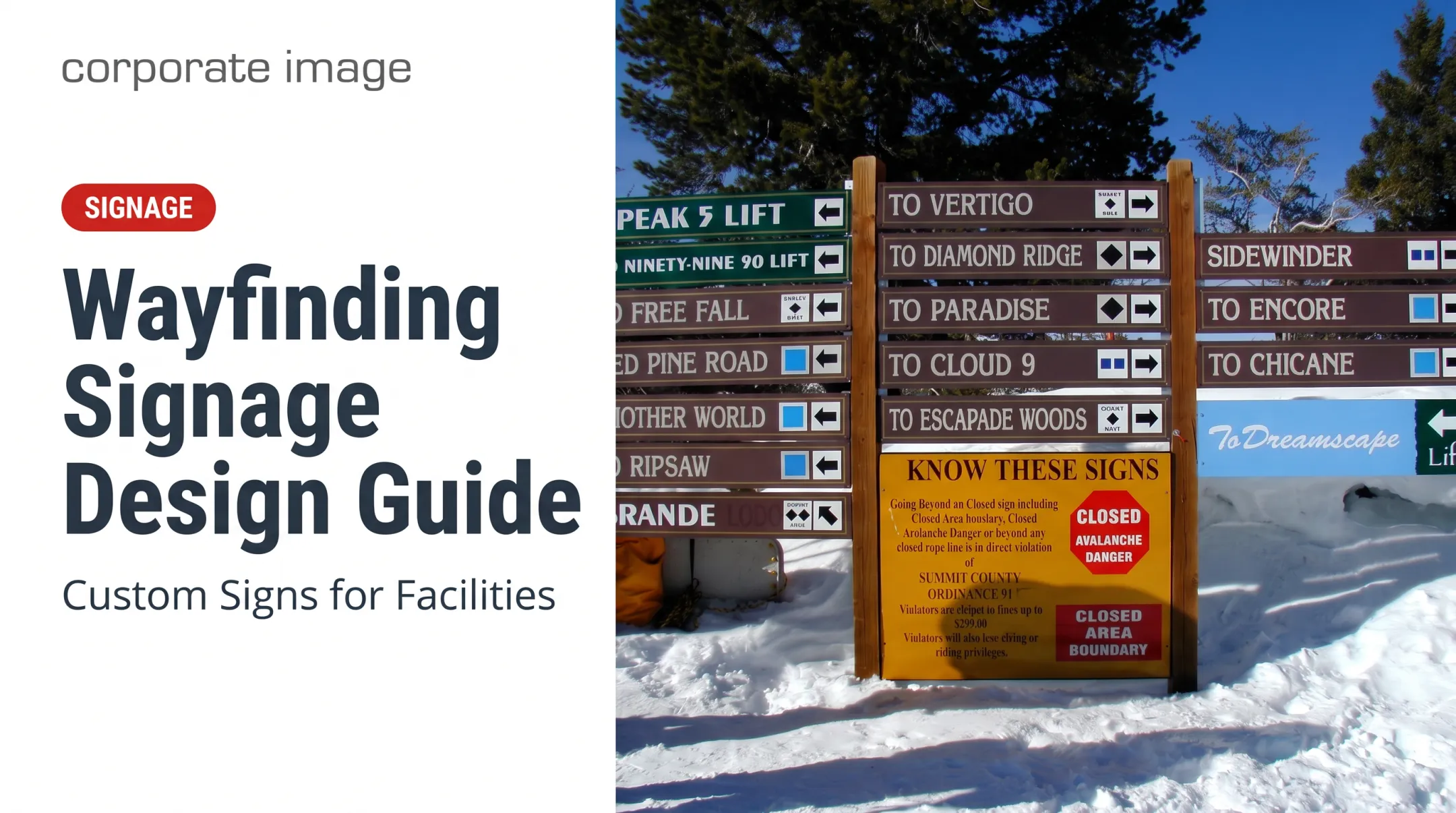
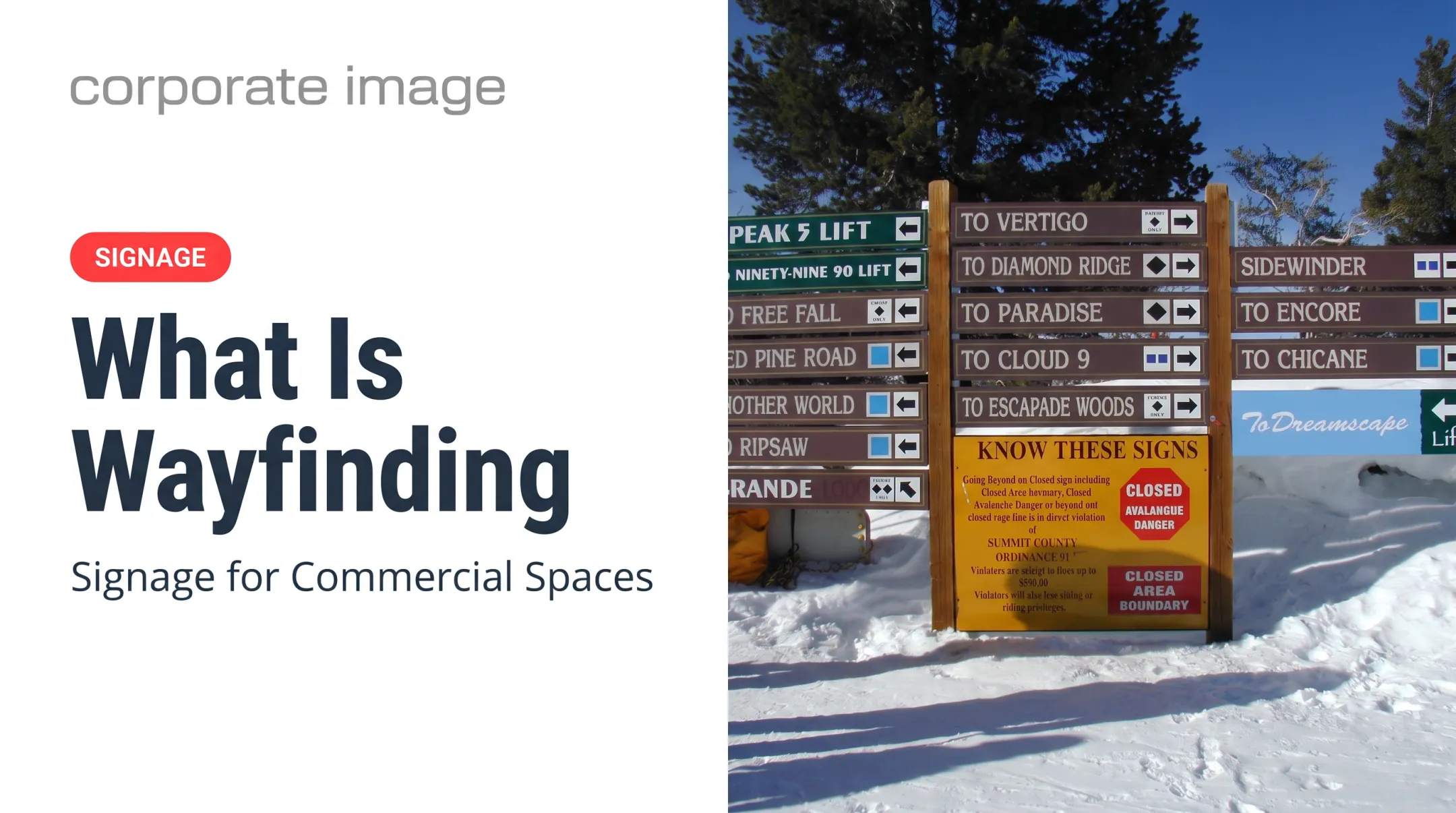
These point to building numbers, tenant areas, parking, shipping and receiving, and exits. Use one system of arrows, colors, numbering, and placement so drivers decide without stopping in a travel lane.
Tenant directories and panel signs
Directories at entrances and internal decision points list names, building numbers, suites, or maps. Replaceable inserts and changeable panels handle turnover. Digital options exist, but weigh long-term maintenance and visual consistency.
Building identification and tenant signs
Wall-mounted signs, dimensional letters, plaques, suite signs, and address markers identify specific occupants. They must read from the relevant approach while respecting landlord standards, architecture, and tenant brand guidelines.
Traffic, parking, safety, and regulatory signs
Typical categories include parking designations, truck routes, loading areas, no-entry, pedestrian crossings, fire lanes, and restricted access. Keep property-management signs distinct from official traffic-control signs, and verify requirements:
- MUTCD applies to open site roadways at office parks, but excludes parking areas and their driving aisles.
- ADA requires the International Symbol of Accessibility on accessible parking signs, and van spaces must say "van accessible."
- OSHA 1910.144/1910.145 set red for danger and stop, yellow for caution and physical hazards.
- IFC 503.3 calls for "NO PARKING - FIRE LANE" signs where the fire code official requires them. Your adopted local fire code controls.
Illuminated, temporary, and specialty signage
Illuminated and reflective signs help night operations. Temporary construction signs, banners, and wall graphics fill gaps during build-outs. Compare options by installation duration, power access, weather, and local limits on brightness or operating hours.
How to Design Signage for Industrial Conditions
Select materials for exposure and maintenance
Match substrates, faces, coatings, and hardware to UV, precipitation, temperature swings, wind, dust, chemicals, abrasion, and impact. Think about the full lifecycle too: cleaning, repainting, panel replacement, fading, corrosion, and repair access.
Product claims are specific to conditions. Avery Dennison's MPI 1105 film, for instance, lists up to 10 years of expected durability only for unprinted film in vertical Zone 1 exposure, and expected is not warranted.
Screen-printed graphics with a liquid UV clear coat are one durable option for harsh sites.
Design for viewing distance and speed
Letter height, contrast, spacing, typeface, symbols, arrow placement, and amount of copy decide whether a moving driver can read a sign.
FHWA's guide-sign guidance uses a minimum of 1 inch of letter height per 30 feet of legibility distance. That is road-sign guidance, not a code for park signs.
Test designs at real approach distances and sightlines. A screen proof lies.
Use lighting and reflectivity strategically
Options include externally lit, internally lit, halo-lit, reflective, and non-illuminated signs. Before choosing, weigh:
- Night operations
- Glare toward neighbors and roads
- Electrical access and maintenance
- Local illumination rules
Reflective materials are a low-power alternative. Translucent screen-print colors over 3M Scotchlite show strong color at night under headlights.
Account for traffic and installation conditions
Check these site factors before you install:
- Mounting height, truck clearance, and impact protection
- Foundations, wind loads, and buried utilities
- Sightline obstructions
Coordinate sign locations with civil and landscape plans, building elevations, fire routes, drainage, snow removal, and turning paths. Wind design follows your locally adopted building code and the ASCE/SEI 7 edition it references.

Keep the system flexible
Modular tenant panels, standard cabinets, replaceable graphics, and documented brand rules limit disruption from turnover or expansion. Tenants get approved logos and colors, and the park keeps a unified look.
Compliance, Placement, Installation, and Maintenance
Confirm legal placement before fabrication
Placement depends on the municipality, zoning district, parcel ownership, public right of way, setbacks, height and area limits, visibility triangles, illumination rules, easements, and park covenants. Local rules vary:
- Ontario, California, keeps monuments behind the street property line.
- Concord, North Carolina, requires signs outside sight triangles shown on permit plans.
Check with planning, zoning, transportation, building, fire, and property-management offices. Call 811 before any digging.
Complete a site survey and installation plan
Verify these items before production:
- Dimensions, sightlines, and utilities
- Foundations and mounting surfaces
- Access limits, pedestrian clearances, and truck movement
Professional installers coordinate anchoring, electrical work, surface prep, traffic control, and final alignment.
Plan for inspection and maintenance
Set a schedule covering:
- Cleaning, fasteners, and lighting
- Finishes, damaged panels, and faded graphics
- Landscaping that blocks sightlines
- Directory updates
Follow manufacturer cleaning rules. 3M advises washing reflective sheeting with a soft brush or sponge and mild detergent, and avoiding high-pressure sprayers and strong solvents, to keep the warranty intact.
Document locations, specifications, wiring, approved graphics, and replacement parts so repairs stay consistent over time.
How Much Does Industrial Park Signage Cost and How Should You Plan a Project?
What drives project cost
No reliable generic price exists, so be wary of anyone quoting one. Cost depends on:
- Sign type, quantity, and dimensions
- Substrate and fabrication method
- Illumination and electrical work
- Structural supports and foundations
- Permitting and engineering
- Site access and installation complexity
- Future update needs
Ask for a line-item quote separating design, engineering, permits, fabrication, delivery, installation, electrical, and maintenance. An unexplained lump sum hides risk.
A coordinated project process
- Inventory the site and interview stakeholders to capture needs and constraints.
- Review traffic patterns and wayfinding gaps.
- Write sign standards for consistency across the park.
- Develop concepts that fit brand and site conditions.
- Complete code and landlord review before fabrication.
- Engineer, fabricate, and install to the approved specs.
- Inspect and document for handover and maintenance.
Bring in property managers, tenants, facilities and safety staff, contractors, and local authorities early. Early alignment prevents redesigns and one-off sign decisions.

Choosing a provider
One provider handling design, production, graphics, and installation reduces handoffs. The International Sign Association (ISA) suggests vetting providers on:
- Licensing and insurance
- Experience with your sign type
- Who performs installation
- Structural compliance
- Maintenance plans
- Completed local work
Corporate Image, based in Salt Lake City, is a full-service signage and graphics partner with more than 30 years of experience. The team handles custom production and professional installation, holds 3M Certified Graphics Installation Company status, and builds durable graphics for demanding environments. It also produces ADA, OSHA, and ANSI safety signs and reflective graphics. For an estimate, call 801-485-0103.
Frequently Asked Questions
What types of signs are used in industrial parks?
Common types include gateway or monument signs, wayfinding, tenant directories, building identification, traffic and parking signs, safety signs, illuminated signs, and temporary project signage.
How much do industrial park signs typically cost?
Cost varies with sign type, size, materials, lighting, quantity, permits, structural work, site conditions, and installation. Request a detailed, project-specific quote rather than relying on a generic price.
Where can I legally place signs in an industrial park?
Local zoning, setbacks, right-of-way rules, visibility requirements, ownership, easements, fire access, and park standards all apply. Confirm requirements with your local authorities before fabrication.
How can industrial park signage improve safety and wayfinding?
A consistent hierarchy separates visitor, employee, truck, pedestrian, emergency, loading, and restricted routes. It also reduces confusion at key decision points.
What materials are best for industrial park signs?
It depends on weather, UV, chemicals, impact risk, viewing distance, size, lighting, and maintenance. Have a sign professional match substrates and finishes to your site conditions.