Most failures look the same: peeling edges, weak initial tack, bubbles, and early wear. This guide covers material selection, surface prep, installation, clear-coat timing, and how to test before you commit to a production run.
Key Takeaways
- Apply decals only after powder and clear coats fully cure, unless the system is oven-engineered.
- Textured or low-surface-energy coatings need conformable vinyl with high-tack or LSE adhesive.
- Cleaning, pressure, temperature, and edge care all affect how long a decal lasts.
- Test the exact vinyl and adhesive on the actual coated substrate first.
Do Vinyl Decals Stick to Powder-Coated Surfaces?
Often, yes. But not automatically.
Why powder coating can challenge adhesion
Powder coating gives you a tough, nonporous finish. Some formulations, though, have lower surface energy or contain additives that keep pressure-sensitive adhesive from wetting out. 3M explains that wetting creates the close contact a bond needs, and low-energy surfaces can make adhesive bead up instead.
Don't treat powder coat as identical to painted metal. 3M's own instructions warn that waxes used in powder coatings can hurt adhesion. When adhesion is critical, check both the coating and adhesive technical data.
Texture, finish, and contours
- Hammered or heavily textured finishes create peaks and valleys that cut adhesive contact.
- Very smooth finishes can still fail if residue or low surface energy gets in the way.
- Rigid films lift on curves and compound shapes. Flexible vinyl handles bends and formed panels better.
Environmental demands
Match materials to real conditions: UV, moisture, temperature swings, abrasion, grease, road grime, chemicals, and frequent washing. "Weatherproof" on a product page isn't a spec. Pick the face film, adhesive, and protective laminate for the actual job.
Confirm before production
Run a sample on the same powder coat, finish, color, and texture you'll use in production. After expected exposure, check for edge lift, bubbling, curling, removal behavior, and appearance.
Use the manufacturer's testing guidance. 3M notes its adhesion test applies only to smooth, properly cleaned surfaces. A pass on a smooth test panel says little about a textured finish. No powder-coat and film combination comes with a universal adhesion guarantee.
How to Choose Vinyl Decals for Powder Coating
Start with the surface
Run through this checklist before choosing a material:
- Smooth or textured? Matte or glossy?
- Curved, recessed, or welded?
- Any wax, silicone, release agent, or other residue?
- Fully cured?
- Exposed to frequent contact or abrasion?
Match the adhesive to the surface
Low-surface-energy or high-tack adhesives suit difficult powder-coated substrates. One example: 3M's 7051SA label stock uses Adhesive 350, which 3M describes as designed to bond to powder coatings and textured or contoured surfaces. That's a product claim, not a promise for every powder formulation.
More tack alone doesn't fix everything. The adhesive also has to suit the powder coat, temperature range, texture, and service conditions.
Select the vinyl construction
| Construction | Example | Best for |
|---|---|---|
| Cast | Avery MPI 1105 SuperCast | Compound curves, corrugations, demanding graphics |
| Calendered | ORAJET 3651RA, Avery MPI 2903 | Flat or simple-curve surfaces, short to medium term |
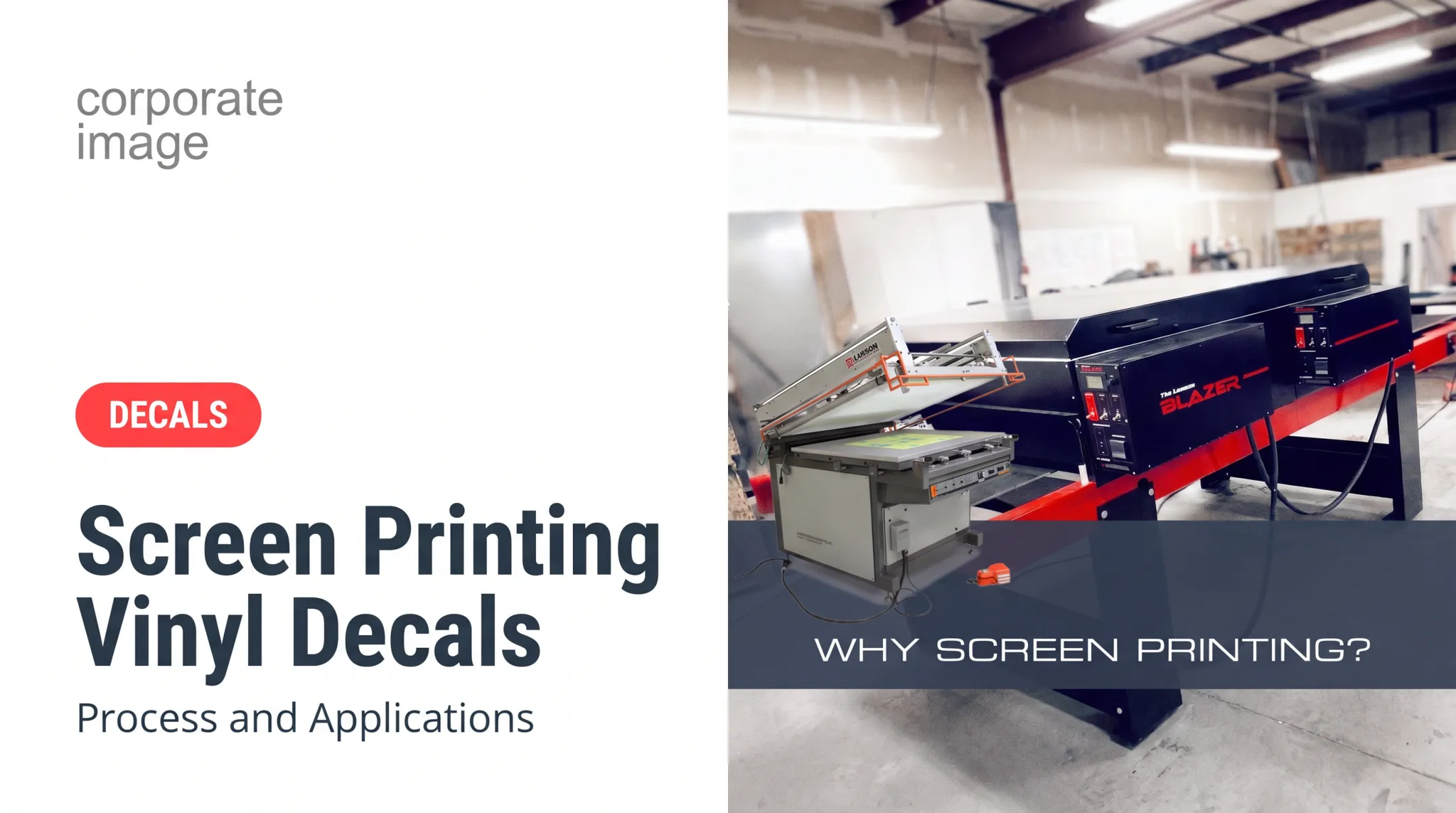
Thickness, flexibility, print method, and cut style also affect edge performance. Screen printing can deposit up to 20 times more ink than digital (200 microns versus 10), which matters for durability. Digital suits short runs or jobs where maximum durability isn't the goal.

Plan for protection
An overlaminate can defend printed graphics against abrasion, UV, chemicals, and repeated cleaning. 3M's Scotchcal 8528, for instance, is listed for excellent UV protection. Still, graphic durability is limited by the weakest component, so test the laminate with your vinyl, ink, powder coat, and install method.
Buy by sample
Request samples or print a small test decal before a large order, especially for OEM labels, fleet graphics, and textured finishes. Then document the vinyl, adhesive, finish, application process, and acceptance criteria so repeat orders stay consistent.
How to Prepare and Install Decals on Powder-Coated Surfaces
Confirm cure and condition
The coating should be fully cured and cooled per the coating maker's requirements. Going too soon can hurt adhesion or trap substances the finish is still releasing. Inspect for chips, rough edges, corrosion, overspray, seams, and contamination first.
Clean without leaving residue
3M's sequence for powder-coated paint is general cleaning, then solvent cleaning, then isopropyl alcohol. Follow it this way:
- Remove dirt and grease.
- Wipe with a cleaner approved for the powder coat.
- Use a lint-free cloth.
- Let the surface dry completely.
Avoid waxes, polishes, silicones, and degreasers that leave a film. Test any cleaner in an inconspicuous spot, and clean immediately before application. Dust collects fast.
Install with the right conditions
Temperature limits belong to the film, not to decals in general. 3M's IJ180-10, for example, lists 40–100°F (4–38°C) for flat surfaces and 60–90°F (16–32°C) for compound curves.
- Work in a clean, shaded area at the manufacturer's recommended temperature.
- Position carefully, then squeegee with firm, overlapping strokes from the center outward.
- Dust, moisture, trapped air, and weak pressure cause bubbles and early edge lift.
Manage curves, texture, and edges
Use conformable vinyl, and apply heat only if the manufacturer permits it. Don't overstretch the film, bridge deep texture, or run critical lettering across seams and sharp transitions where stress concentrates.
Let it bond
Avery's guidance for its Easy Apply films calls for several hours before functional bond, and longer in cold conditions. Follow your material's dwell guidance before aggressive washing or heavy use. Pressure washers, abrasive brushes, harsh solvents, and repeated impact at edges all shorten decal life.
When professional installation helps
Large graphics, difficult surfaces, equipment fleets, and multi-location rollouts benefit from a professional. Corporate Image handles design, production, and installation, with over 30 years of graphics experience. Its credentials include 3M Certified Graphics Installation Company and 3M Preferred Graphics Installer. The team has experience with textured painted surfaces and low-energy plastics and can advise on project-specific application.
When to Apply Decals: Before or After Clear Coat?
The standard sequence
Finish the powder coat and clear coat first. Let them cure fully, clean, then apply the vinyl. This keeps ordinary pressure-sensitive vinyl and its adhesive out of the oven.
Applying a decal under clear powder
Don't assume standard PVC vinyl survives curing. PPG's Appliance White powder, for example, lists cures such as 10 minutes at 375°F.
Service ratings on vinyl, like ORAFOL's 176°F, say nothing about oven survival. Even 3M's polyimide 7811 label, rated to 450°F short-term, still needs confirmation for your cure cycle.
No authoritative source sets a universal before-or-after rule for pressure-sensitive decals, so treat under-clear work as a validation task. Have the powder coater and decal manufacturer verify:
- Heat resistance and dimensional stability
- Outgassing and discoloration
- Final adhesion
Test the whole system
Build a complete sample: substrate, pretreatment, base powder, decal, clear coat, and cure cycle. Testing parts separately misses interactions. That full-system check matters because post-cure decals are easier to replace or update. Under-clear graphics complicate repairs, appearance, and warranty responsibility.

Where Vinyl Decals Work Best and How to Maintain Them
Suitable applications
- Trailers, trucks, and fleet vehicles
- Machinery, enclosures, cabinets, carts, and tools
- Outdoor signage components and facility assets
- Resort equipment, safety labels, and OEM product graphics
Corporate Image's gallery shows a folding ladder with branded, instructional, and warning decals on rails and steps, which is a good example of mixed purposes on one product. Decorative branding, ID labels, safety messages, and high-contact graphics each place different demands on material and adhesive.
Exposure and cleaning
Outdoor and industrial use brings UV, snow, road salt, mud, grease, chemicals, abrasion, and temperature cycling. Stated film lives vary: Avery's MPI 1105 cast lists up to 7 years vertical, while ORACAL 641 lists 3-4 years. Those are product-sheet figures, not guarantees for a printed graphic on powder coat.
Clean gently. 3M's maintenance bulletin permits pressure washing only with precautions: a 40-degree or wider nozzle with a tip guard, kept about 12 inches away, never aimed at edges at shallow angles. Excess pressure can force water under the film and cause lifting.

Inspection and replacement
Check regularly for:
- Lifting corners
- Cracked or faded print
- Bubbling
- Abrasion or contamination
- Damage to the powder coat underneath
Replace a damaged decal when the surface beneath is sound. If the coating itself is chipped or corroded, repair it first. Repeated failure points to something unresolved: contamination, texture, cure, or adhesive compatibility.
Frequently Asked Questions
Do you put decals on before or after clear coat?
Generally after the powder coat and clear coat have fully cured. Under-clear applications need a purpose-rated material and a verified complete-system test.
What sticks to powder coating?
Clean, cured powder coat accepts vinyl with an adhesive suited to its surface energy and texture. Always confirm with a sample test.
What can and cannot be powder coated?
Powder coating is typically used on metal, and special processes can handle some plastics and MDF. Heat-sensitive materials and some assemblies may not tolerate the cure, so consult your powder coater.
How do you prepare powder coating before applying vinyl decals?
Remove dirt, grease, wax, silicone, and residue with a compatible cleaning process. Dry completely, then run a small adhesion test.
Will vinyl decals stick to textured powder coating?
They can, though deep texture reduces contact area. Choose a conformable vinyl with a high-tack adhesive, and test it on that finish.
How do you keep vinyl decals from peeling off powder coating?
Start with full cure and residue-free prep. Then pick the right materials, install under proper conditions with firm pressure, protect the edges, and test on the actual coated surface.