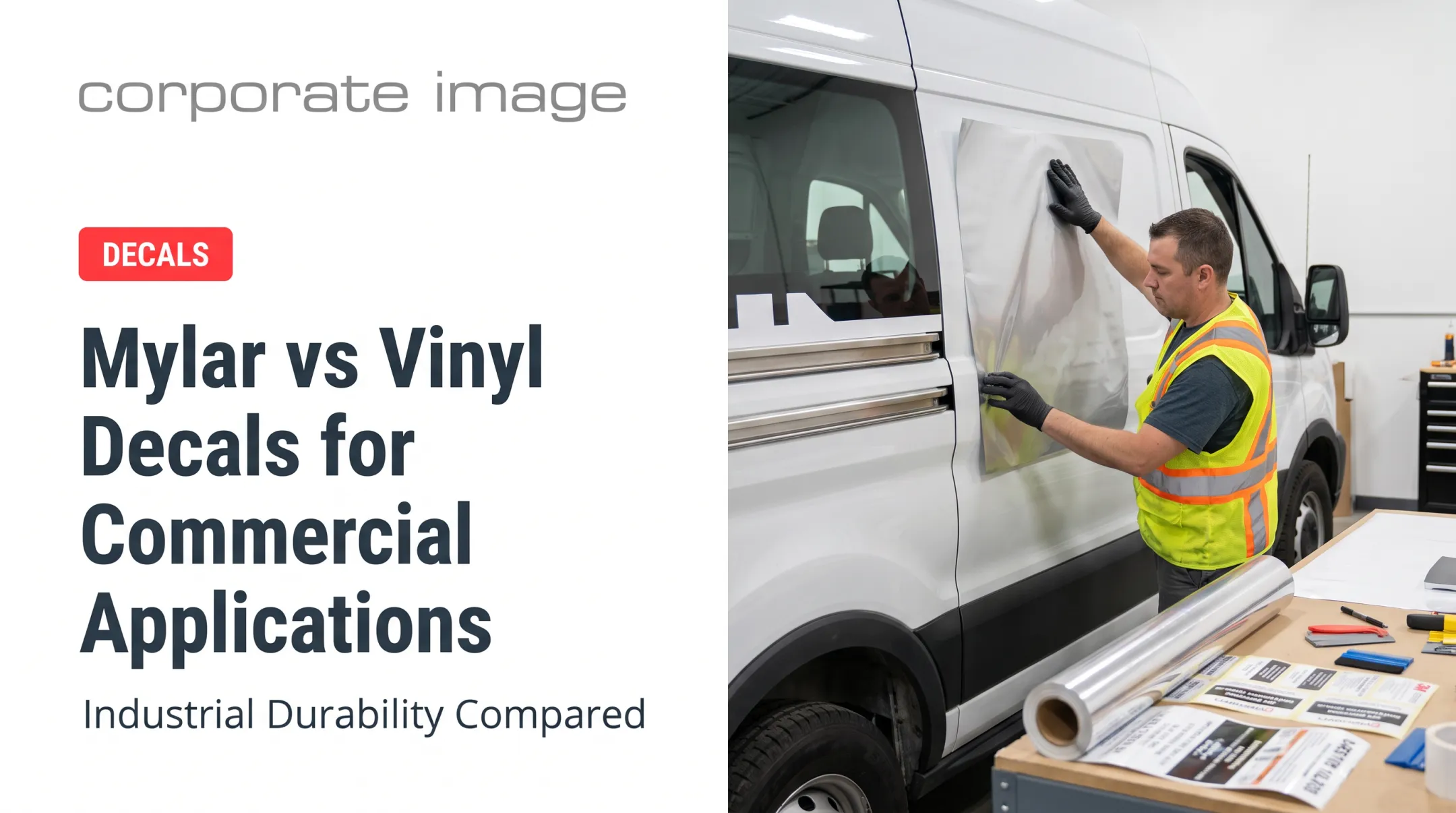
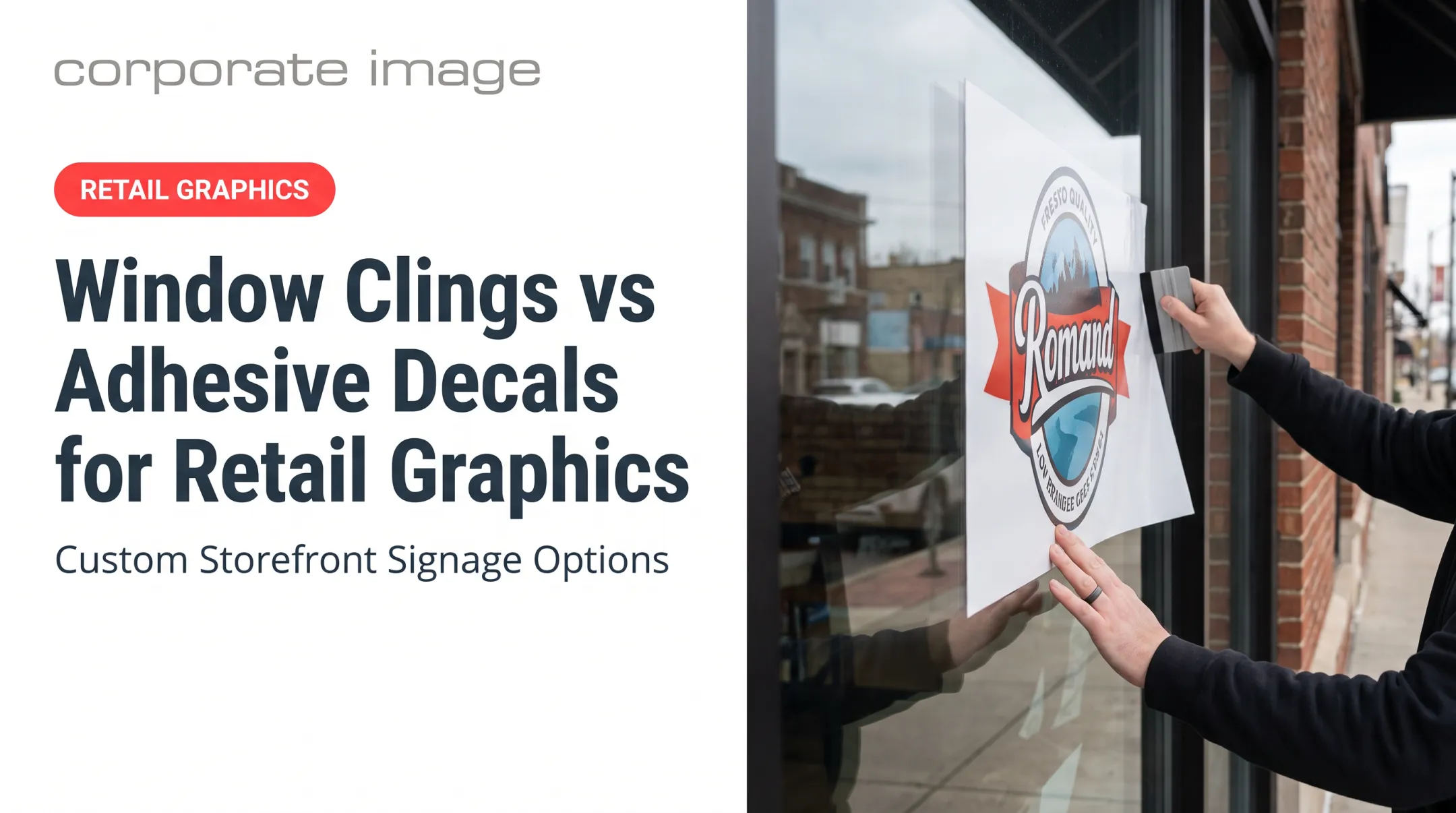
Laminating everything adds cost and stiffness. Skipping it in a harsh environment invites fading, scratches, chemical damage, and early rework. Pulling a failed decal off a forklift or a tanker trailer costs far more than the film would have.
This article covers when industrial decals need lamination, how the answer changes by application, which signs to check, and when lamination is the wrong call.
Key Takeaways
- Laminate decals that face sun, moisture, abrasion, chemicals, heavy handling, or aggressive cleaning.
- The need depends on the ink, vinyl, service life, surface shape, and environment, not just indoor versus outdoor.
- Short-term indoor decals and tight curves may do fine without it.
- Confirm compatibility and ink readiness before production, not after failures.
Why Timing Matters for Industrial Decals
Lamination belongs in the specification stage. It changes how the decal looks, how it handles, and how it installs, so it can't be bolted on later without consequences.
What an overlaminate does
An overlaminate shields the print from UV, moisture, scuffing, dirt, oils, and repeated cleaning. Roland DG's glossary describes it as a thin transparent film that protects against water, abrasion, or UV light. The actual protection varies by film, so check the data sheet for the one you pick.
Why early decisions save money
Deciding early lets you:
- Pick compatible materials
- Plan production around the chosen film
- Approve a sample before the full run
That timing also avoids replacement and reinstallation, which is where costs balloon. Large-quantity decal orders amplify the risk, so a wrong guess multiplies across the run.
Legibility and safety
Industrial labels carry warnings people must read. Think "NO SMOKING WITHIN 50 FEET" on a tanker or a "3 POINT" access decal on heavy equipment. A glossy film that glares under shop lights defeats the purpose.
Check manufacturer and regulatory specs before you lock the finish. UL 969 evaluates a label's overlaminate, ink, and stock together as a system, so a laminate alone doesn't make a label compliant.
Best Time to Laminate Industrial Decals Based on Different Scenarios
The right moment depends on exposure, expected lifespan, print process, surface, and cleaning routine. Here is how each factor plays out.
Based on Usage or Workload
Evaluate lamination for decals on:
- Machinery and equipment
- Forklifts and service vehicles
- Toolboxes
- High-touch panels
Repeated contact, friction, impacts, and loading wear unprotected print fast. Low-contact indoor decals are different. If they're temporary, easy to replace, and see little abrasion or moisture, an overlaminate often isn't worth it.
Based on Condition or Performance Indicators
Signs that point toward lamination:
- Early color degradation
- Scuffing or edge wear
- Exposed ink
- Damage from recurring cleaning
- A required service life longer than the base print can deliver
Specify lamination before production when risk is predictable. Waiting for failures means replacing installed decals. Use manufacturer durability data instead of a universal lifespan.
For instance, HP's latex durability guidance says lamination is typically not required under one month for its named latex inks unless conditions are harsh. It recommends it for 1 to 6 months where rubbing is expected, and strongly beyond 6 months. Those thresholds are specific to that ink system.
Lamination protects the printed face only. It won't fix a wrong adhesive, a dirty surface, bad installation, or a deteriorating substrate.
Based on Environmental or External Factors
Outdoor and high-exposure conditions include sun, rain, snow, road spray, freeze-thaw cycles, dust, oils, and industrial cleaners. Check the laminate's UV, moisture, temperature, and chemical specs.
Published numbers are product-specific. One 3M Scotchcal bulletin lists an in-use range of -65°F to 200°F, and its claims cover occasional fuel spills and mild acids, not immersion or blanket solvent resistance. Washdown and chemical areas need compatibility testing against your actual degreasers, fuels, and cleaners.
Finish matters too. Gloss, satin or luster, and matte films change glare. Choose based on lighting and viewing angle. 3M, for example, positions its 8915 ultra-matte film for reducing glare.
Based on Operational or Workflow Cycles
Decide on lamination during artwork approval and material specification, before printing and finishing, so the decal is produced and cut as one system.
- Schedule production around equipment downtime, planned maintenance, fleet service, or assembly windows
- Confirm ink-curing timing with the manufacturer before laminating
- Allow for the separate wait after lamination before application
ORAFOL's solvent-ink guidance calls for at least 24 hours, preferably 48 to 72 hours at 70°F, before laminating. Correctly dried latex can be laminated right away, and UV inks have their own window. 3M cites about 24 hours at room temperature (8 hours with heated rolls) after lamination before application.

Signs It's the Right Time to Laminate Industrial Decals
Lamination is usually justified when the environment creates a predictable risk of surface damage, or when replacing the decal would interrupt operations.
A quick checklist
Laminate if the decal sees any of these:
- Direct sunlight or outdoor exposure
- Frequent handling or abrasion
- Pressure washing
- Chemical contact
- Repeated wiping
- Vehicle use
- Long required service interval
For outdoor exposure in particular, Arlon's decal guide recommends overlaminate to extend decal life.
Test before you commit
Run a sample or test panel before a big order. Check:
- Adhesion
- Appearance
- Edge behavior
- Scuff resistance
- Cleaning exposure
- Compatibility
Evaluate the whole construction, not the laminate alone: vinyl, ink or print method, adhesive, laminate, cut style, and surface. 3M notes that a construction's durability follows its weakest component.
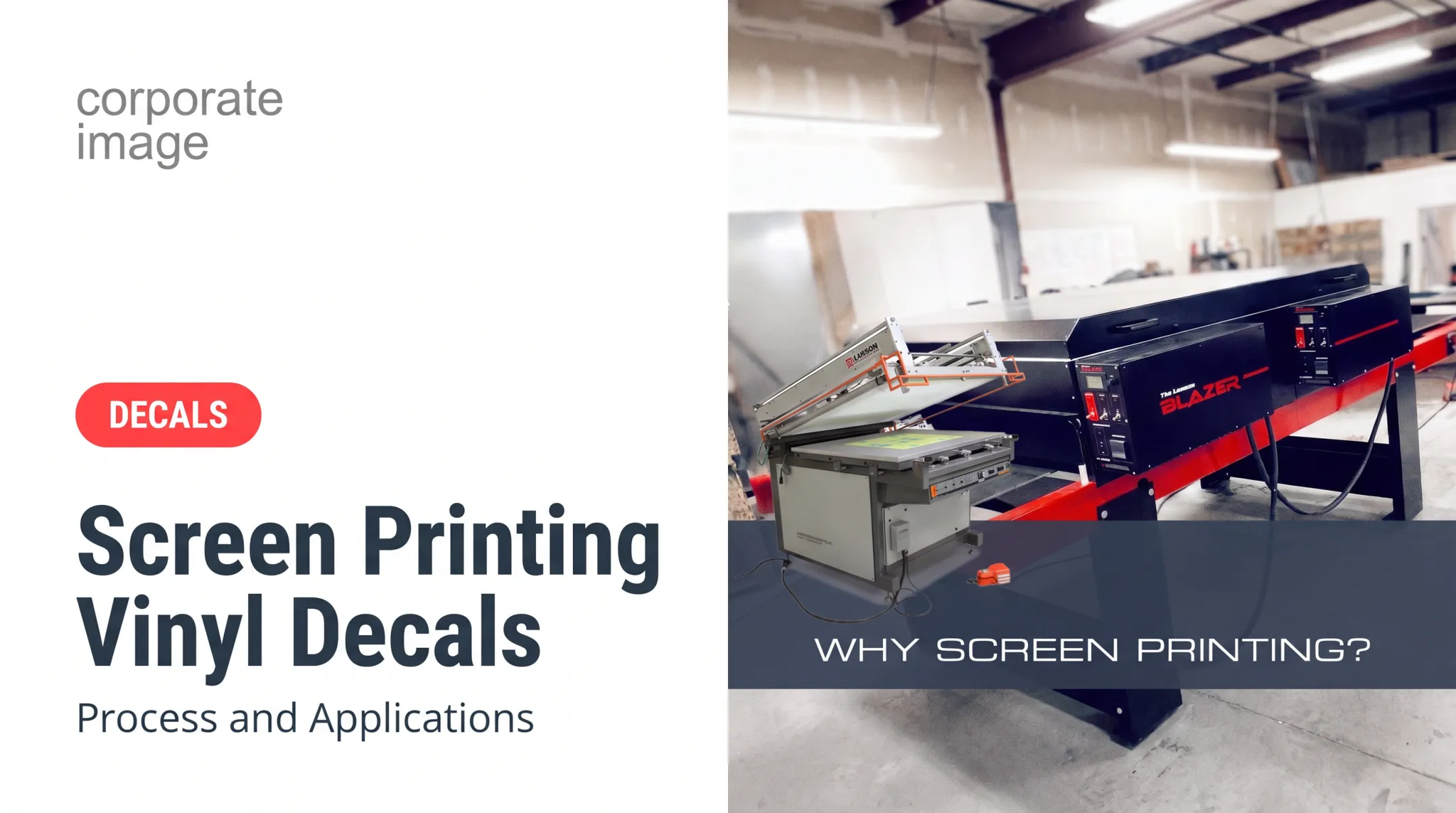
Print method is part of that equation. Screen printing deposits far more ink than digital and bites into poly plastics. Corporate Image recommends it for harsh or long-term use, and uses liquid UV clear coat over screen-printed work. Adhesive vinyl laminate is more common on digital prints.

When You Should Avoid Laminating Industrial Decals
Skip lamination when:
- The graphic is short-term and indoors
- Contact is low
- Identification is temporary and cost-sensitive
- The print system is already specified for the exposure
Lamination also adds thickness and stiffness. That hurts conformability on tight curves, irregular contours, rivets, seams, and textured surfaces.
ORAFOL's ORAGUARD 215, for example, is flat-only, while Avery Dennison lists its DOL Max family for rivets, corrugations, and complex curves. Confirm limits with the manufacturer.
Other red flags:
- A surface that needs a writable finish
- Labels with strict optical or scanning requirements
- Untested chemical exposure
- Ink that hasn't fully cured
- A laminate that conflicts with the base vinyl or adhesive, such as cast film paired with a mismatched laminate
What Happens If Lamination Is Chosen at the Wrong Time
Skipping it when you needed it
In demanding settings you'll see faster fading, visible scratches, damaged print, and a shabby look. Then come more frequent replacements.
Adding it without evaluating the application
- Excess stiffness and glare
- Compatibility problems
- Bubbles, silvering, and edge lifting
- Cutting difficulties and rework
Those defects often trace back to process timing, not only film choice. Laminating too early is a common culprit. 3M warns that incomplete ink drying can cause curling, shrinkage, and adhesion failure. Its graphics warranties exclude those failures. Heavy ink loading can also lead to overlaminate lifting.
The operational bill
Premature failure drives real costs:
- Replacement decals and extra installation labor
- Equipment access time and downtime
- Inconsistent labeling across a fleet or plant
No published benchmark puts a dollar figure on this, but anyone who has pulled a forklift out of service for a re-decal knows the math.
Best Practices for Timing Lamination Correctly
- Start the brief with the facts. Location, surface material, exposure, cleaning process, service life, viewing needs, and replacement constraints.
- Match the overlaminate to the print method and base vinyl. Request data or a sample covering UV, temperature, moisture, abrasion, and chemical performance.
- Use one provider for the whole chain. Corporate Image in Salt Lake City designs, prints, and installs industrial decals and labels, with a factory-direct 3M relationship and 3M-certified installers. That suits demanding applications, including difficult surfaces like low-energy plastics and textured paint.
- Approve the final construction before the run. Record the material, finish, installation conditions, and maintenance guidance for reorders.

Conclusion
No rule says every industrial decal must be laminated. Exposure, service life, print system, surface, and maintenance demands decide it.
Lamination earns its cost when it targets predictable wear from UV, moisture, abrasion, contaminants, or cleaning. Early material planning, compatibility checks, and sample testing improve durability, appearance, and installation results.
Frequently Asked Questions
Should you laminate your stickers?
Yes, when they face UV, moisture, abrasion, chemicals, frequent handling, or long use. Short-term, low-contact indoor stickers often don't need it.
What are the key differences between vinyl and laminated stickers?
Vinyl is the base material. A laminated sticker adds a clear film over the print. That film can improve durability but also adds thickness, changes the finish, and reduces flexibility.
What is the difference between vinyl stickers and vinyl decals?
The terms overlap heavily. A decal usually means a graphic meant to be applied to a surface. Construction, adhesive, cut style, and use matter more than the name.
How can I tell if a sticker is vinyl?
Flexibility, water resistance, surface feel, and backing offer clues, but none is definitive. For industrial work, confirm the material with the manufacturer's specification.
What are laminated stickers?
They carry a clear protective film over the printed face, applied before final cutting or application. The film helps resist UV, moisture, scuffing, and cleaning wear.
What is a kiss cut?
A kiss cut slices through the decal material but leaves the release liner intact. Laminated decals may need different cutting settings or finishing specs.