Introduction: Wayside Exhibits That Inform, Orient, and Connect Visitors
A trail without context is just a path. A good wayside exhibit changes that. It tells visitors what they're looking at, why it matters, and where to go next.
The National Park Service defines a wayside exhibit as words and pictures on a two-dimensional outdoor panel that interprets, informs, or orients visitors to a specific landscape. These displays sit near the subject, viewpoint, or route they explain. "Wayside signage" is a broader term. It also covers wayfinding, identification, safety, and commemorative signs.
This guide covers exhibit types, content and layout, materials and installation, accessibility, and the planning and cost factors worth budgeting for.
Key Takeaways
- Start with one clear visitor goal, then write and design around it.
- Match panel material, frame, and anchoring to your actual climate and site.
- Verify which accessibility rules apply to your land and facility.
- Budget for design, fabrication, mounting, installation, and upkeep, not panels alone.
Types of Wayside Exhibits and Signage
An interpretive wayside invites visitors to stop and learn. A directional or regulatory sign helps them navigate or follow a rule. Many sites need both, and no single national taxonomy defines every category. Montana FWP, for example, lists enforcement, wayfinding, and general information as separate sign functions.
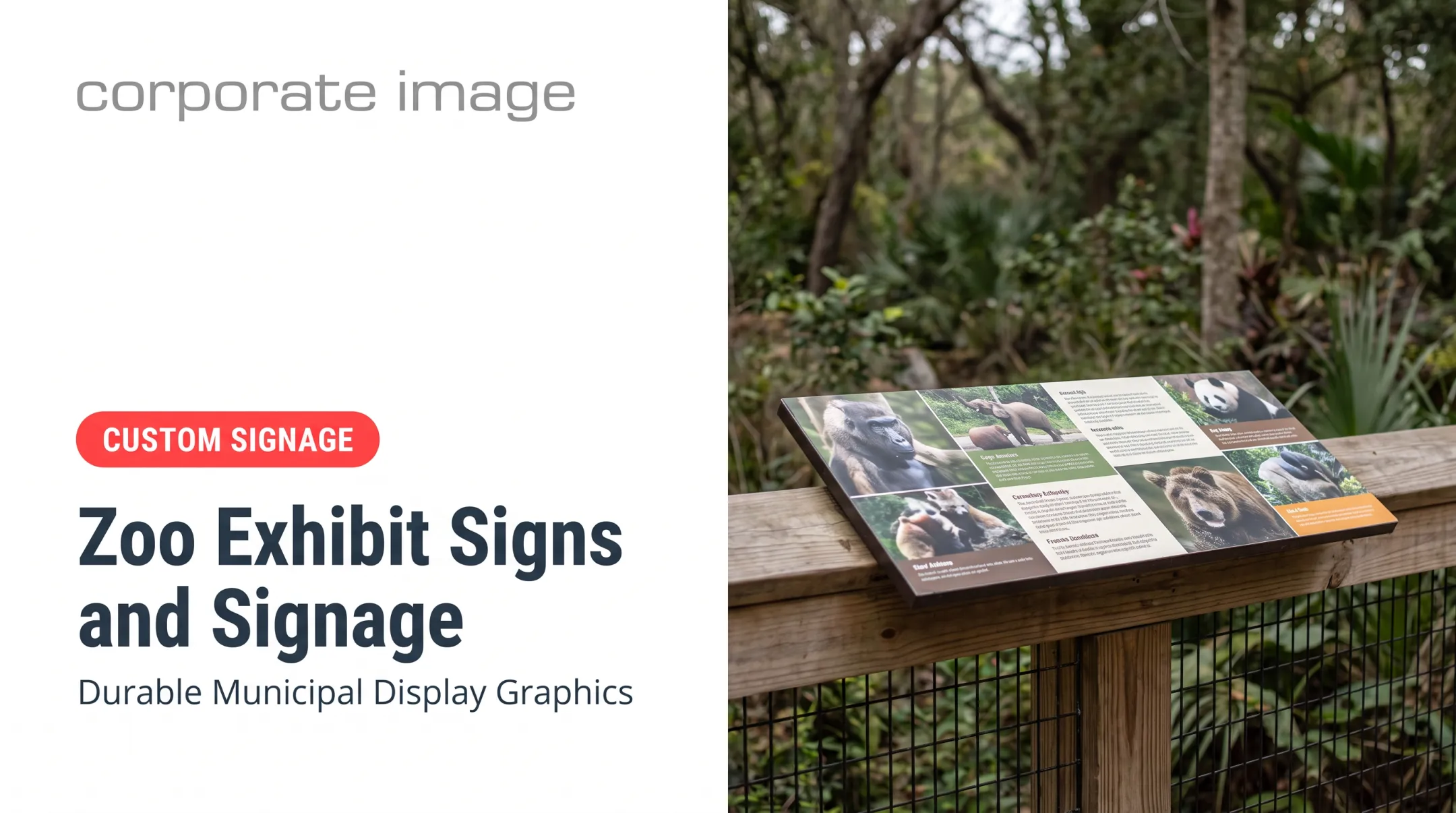
Interpretive and Educational Panels
These explain natural features, wildlife, geology, ecology, or site stories. Photography, illustrations, maps, and short text carry the lesson. The Forest Service's Native Pollinator Garden panel at Wayne National Forest is a good example: it covers native plants, pollinators, and habitat in one glance.
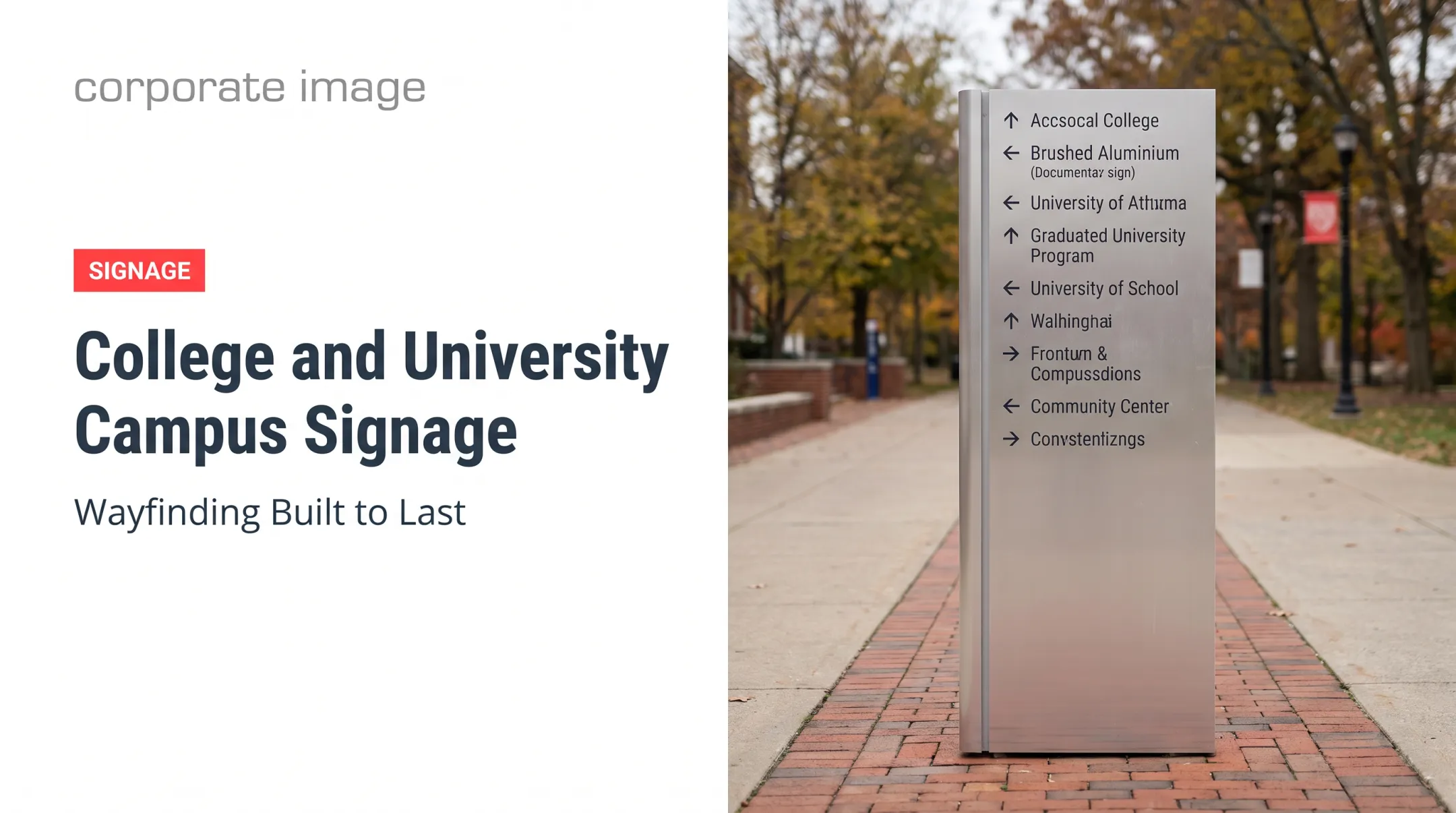
Wayfinding, Trail Map, and Orientation Signs
These answer "where am I?" and "where next?" Common formats include:
- Trail maps with color-coded legends
- Directional signs with arrows and difficulty symbols
- Mileage and route information
- Orientation kiosks at trailheads and base areas
Mountain resorts show how far this can go. A Sun Valley information kiosk combines sightseeing, hiking, mountain-biking, and trail maps with a current conditions board. Snowbasin's trail-map signs use legends for difficulty, lifts, ski patrol, restaurants, and restrooms.
Historical, Commemorative, and Cultural Exhibits
These present people, events, buildings, and communities. Base the story on sources, tell it respectfully, and have relevant stakeholders review it before production. Specify the purpose of each panel rather than assuming a standard "commemorative" format exists.
Identification, Safety, and Resource-Management Signs
These include plant and wildlife identifiers, hazard notices, closures, and resource-protection messages. Match content length to the visitor's immediate need. A closure sign needs a symbol and one word. An avalanche-control gate sign needs a short, unmistakable warning. Save the story for interpretive panels.
Examples span parks, nature centers, historic sites, trail systems, public spaces, and mountain recreation areas. Pick the format that fits the visitor's task at that spot.
Designing Wayside Exhibits That Visitors Read
Start with the communication goal. Decide what visitors should notice, understand, feel, or do, then cut everything that doesn't serve it.
Establish a Clear Content Hierarchy
Build multiple reading levels:
- A headline and visual hook for glancers
- A short introductory message
- Supporting copy for the curious
- Captions and labels for detail
- A call to action where relevant
The Harpers Ferry Center (HFC) wayside guide puts key thoughts in the main text and supporting detail in captions. It gives 45 seconds as an average visitor attention estimate, though that is design guidance, not a measured universal. Its word-count examples vary by format:
| Format | HFC example length |
|---|---|
| Trailside exhibit | 25 words |
| 24-by-24-inch panel | About 75 words |
| 36-by-24-inch panel | 75-100 words |
| 42-by-24-inch panel | Up to 100 words |

HFC also identifies grade 8 as an ideal reading level, with roughly grades 8-10 as a range. Edit research-heavy material down. Read the draft aloud and check that the main idea lands quickly.
Use Visuals, Maps, and Place-Specific Storytelling
Photos, illustrations, diagrams, maps, and timelines communicate faster than paragraphs and tie the panel to its location. Tactile or interactive elements can add more. Choose visuals that support the central story, not ones that crowd the layout.
Secure rights for any image that isn't public domain, keep the agreement records, confirm historical accuracy, and credit sources.
Design for Outdoor Legibility
Outdoor panels fight glare, weather, and distance. Before production, check:
- Type size and viewing distance
- Contrast, color, and background cleanliness
- Letter and line spacing
Proof artwork at full scale, ideally in a realistic outdoor setting.
Where ADA visual-character criteria apply, the Access Board requires non-glare characters and backgrounds and strong contrast. Its table sets a 5/8-inch minimum character height for certain viewing distances, increasing with distance. Those are standards provisions, not a blanket panel spec, so confirm scoping. For bilingual or multilingual layouts, plan translation early so the text fits.
Match the Exhibit to Its Physical Setting
Let the site shape the panel. Factor in sightlines, approach direction, traffic flow, scenery, lighting, and weather. Define where visitors will actually stand, then set orientation, size, frame style, and content amount to match.
Before final approval, involve:
- Site managers and interpreters
- Designers and accessibility specialists
- Community representatives and maintenance staff
Materials, Frames, Installation, and Longevity
Panel material, finish, frame, anchoring, installation quality, and maintenance work together. A great panel on a weak mount fails early.
Choose Materials for Climate and Site Conditions
NPS lists four common panel technologies:
- Direct-printed aluminum with a clear hardcoat
- Fiberglass-embedded inkjet prints
- High-pressure laminate (HPL)
- Porcelain enamel on steel
NPS names sunlight as a major damaging factor, alongside temperature swings, wind-blown sand, dirt, moisture, and vandalism. Choose for your real environment: UV, snow, freeze-thaw, rain, humidity, wind, and salt or industrial exposure.
Compare warranties carefully. One 2026 HPL warranty covers manufacturing defects for ten years but excludes misuse, improper installation, and unsealed-edge moisture. Another manufacturer offers 25 years against defined fading, also with exclusions.
Neither is a universal lifespan. Read the scope, and ask for documentation behind any durability claim.
Select the Right Frame, Base, or Mounting System
Frame and mount options include:
- Low-profile bases
- Upright frames and kiosks
- Wall or rail mounts
- Pedestals and custom supports
Each changes viewing angle, accessibility, footprint, and fit with the landscape.
Site conditions drive the details: soil, slope, drainage, wind load, snow accumulation, anchoring hardware, and buried utilities. One manufacturer's pedestal guide calls for footings below the frost line but says requirements depend on soil and local frost depth, so don't copy one detail everywhere.
Call 811 before any excavation, and check whether engineering or permits are required.
Coordinate Fabrication and Professional Installation
Align design files, proofing, fabrication, delivery, removal of old signs, site prep, and installation. Mismatches between panel and mount cost time. A site survey, or a detailed remote assessment, should confirm measurements, access, visitor circulation, and restrictions before fabrication starts.

Plan for Maintenance and Future Updates
The NPS Harpers Ferry Center recommends inspecting and cleaning waysides twice a year. Your plan should also cover:
- Graffiti response
- Hardware and frame stability checks
- Vegetation growth
- Fading and damage
- Seasonal closures
- Outdated information
Keep source files and content records so maps, regulations, translations, and contact details can change without redesigning the whole exhibit.
Accessibility and Inclusive Visitor Experience
Accessibility starts with the route and the space in front of the panel. You need:
- A stable approach
- Room to maneuver
- Appropriate slope
- Reachable content
- A viewing angle that works for different heights
Verify which rules apply. The ABA Outdoor Developed Areas provisions and DOJ's 2010 ADA Standards differ in scope, depending on land ownership, agency, and facility. NPS design guidance says to place waysides on an accessible route wherever possible, with a 32-inch frame-bottom height for low-profile exhibits. That is programmatic guidance, not a legal determination.
Accessible communication features can include:
- Strong contrast and readable type
- Plain language and multilingual content
- Braille or raised elements where appropriate
- Tactile maps, models, or texture blocks
- Captions and audio description
NPS recommends nonvisual interpretation for major features. Add each feature where it fits the story and setting.
For cultural, historical, or Indigenous stories, engage the communities involved. NPS co-stewardship guidance calls for updating waysides to include Indigenous perspectives and language, and for consulting all affiliated Tribes.
Review by subject-matter experts and affected communities improves accuracy, representation, and trust.
Planning, Pricing, and Choosing a Wayside Signage Partner
A Practical Workflow
- Define goals and audience for the exhibits.
- Inventory existing signs and note condition or gaps.
- Research and develop content with subject experts.
- Survey the site for sightlines, access, and mounting.
- Create design proofs for stakeholder review.
- Select materials and mounts for climate and traffic.
- Fabricate and install to approved specs.
- Inspect finished work and schedule maintenance.
National Park Service (NPS) planning adds a useful step: document each exhibit's topic, purpose, view, location, and landscaping, and include subject-matter experts, interpreters, and designers on the team.
What Drives Price
No universal wayside price exists. Cost depends on:
- Panel size, quantity, material, and fabrication method
- Frame style, custom shapes, maps, and illustrations
- Translation, tactile, or audio elements
- Engineering, site prep, shipping, and permits
- Installation difficulty and ongoing upkeep
Published examples show why scope matters:
| Example | Scope | Figure |
|---|---|---|
| Vacker 2025 price guide | 24-by-36-inch, 1/2-inch HPL panel | $720 for one; $638 each for three or more |
| Vacker 2025 frame | Frame with sleeve for wood post | $262, panel separate |
| Summit County, Utah, 2024 RFP | Design only, up to 11 signs | $6,500 grant-funded budget |

These are product or design-scope figures only. They exclude installation and should not be treated as installed per-panel benchmarks.
Evaluating a Provider
Look for:
- Outdoor signage experience and references
- Design and production capability
- Installation qualifications
- Material samples and a clear proofing process
- Project management
- Warranty terms and maintenance support
- One coordinated workflow from design to installation
Corporate Image is a Utah-based full-service graphics and signage company with more than 30 years of experience. It offers custom design, production, and professional installation for durable signage projects, and its installers are 3M certified. Its work includes on-mountain trail signs and wayfinding for ski resorts. Confirm materials and specifications against your own site needs.
Frequently Asked Questions
What is wayside signage?
Wayside signage means outdoor signs or exhibits placed along trails, roads, viewpoints, parks, historic sites, and public spaces. They interpret, identify, orient, direct, or protect visitors.
What are the different types of wayside signage?
Common types include interpretive panels, trail maps, wayfinding signs, historical or commemorative exhibits, identification signs, kiosks, safety signs, and resource-management notices.
How much does wayside signage typically cost?
It varies with size, quantity, materials, mounting, content and design needs, accessibility features, site prep, shipping, and installation. Request a project-specific quote that separates design, panels, frames, and installation.