Introduction: Roofing Truck and Vehicle Wraps Turn Work Vehicles Into Brand Assets
A roofing truck sits in driveways, on commercial lots, at stoplights and along roadsides all week. Every stop is a chance for a homeowner, property manager or neighbor to learn your name.
Many roofing companies still struggle with plain or cluttered trucks that fail to turn those glances into calls. A strong wrap balances visibility, credibility, readability and one clear next step.
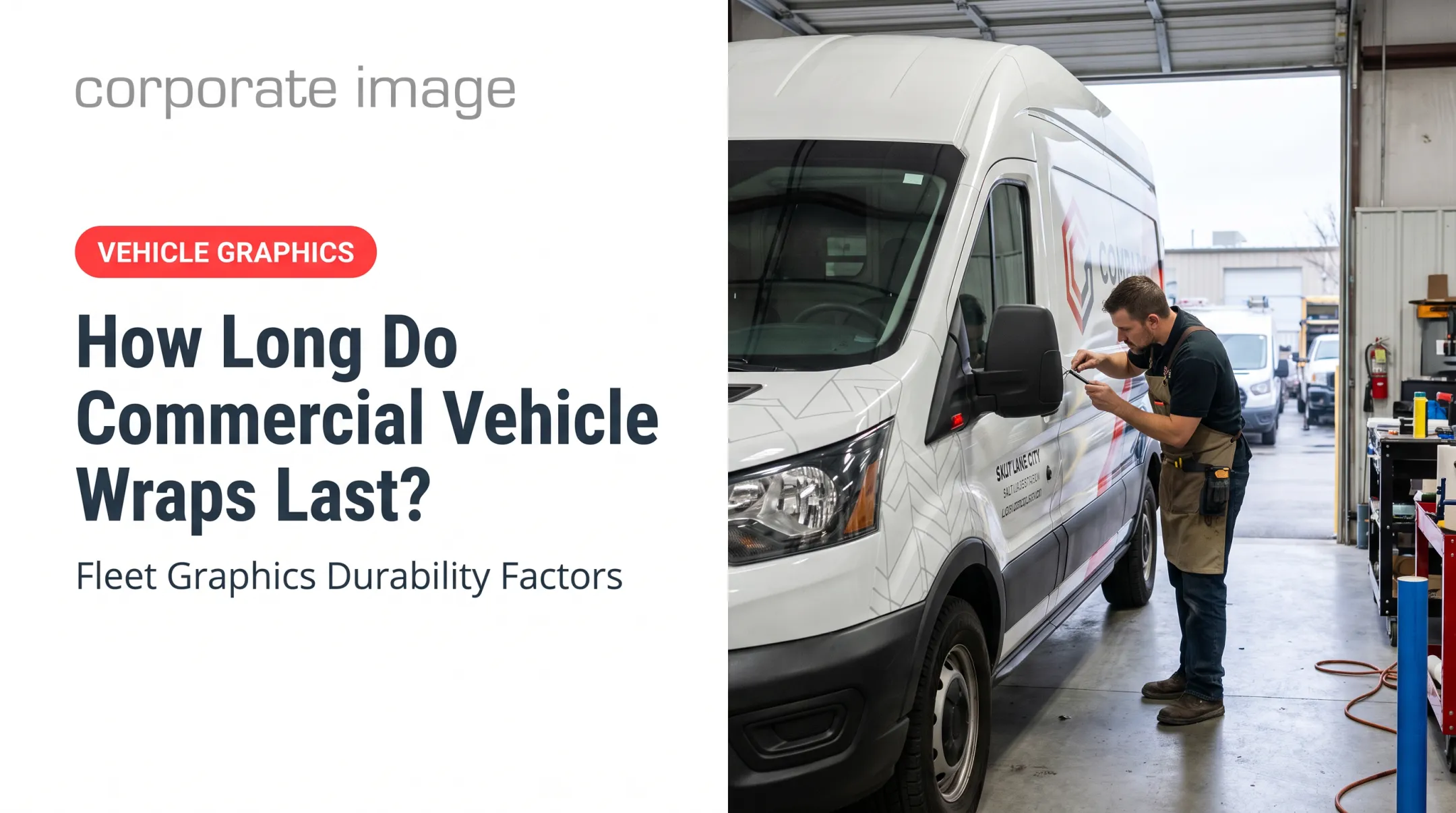
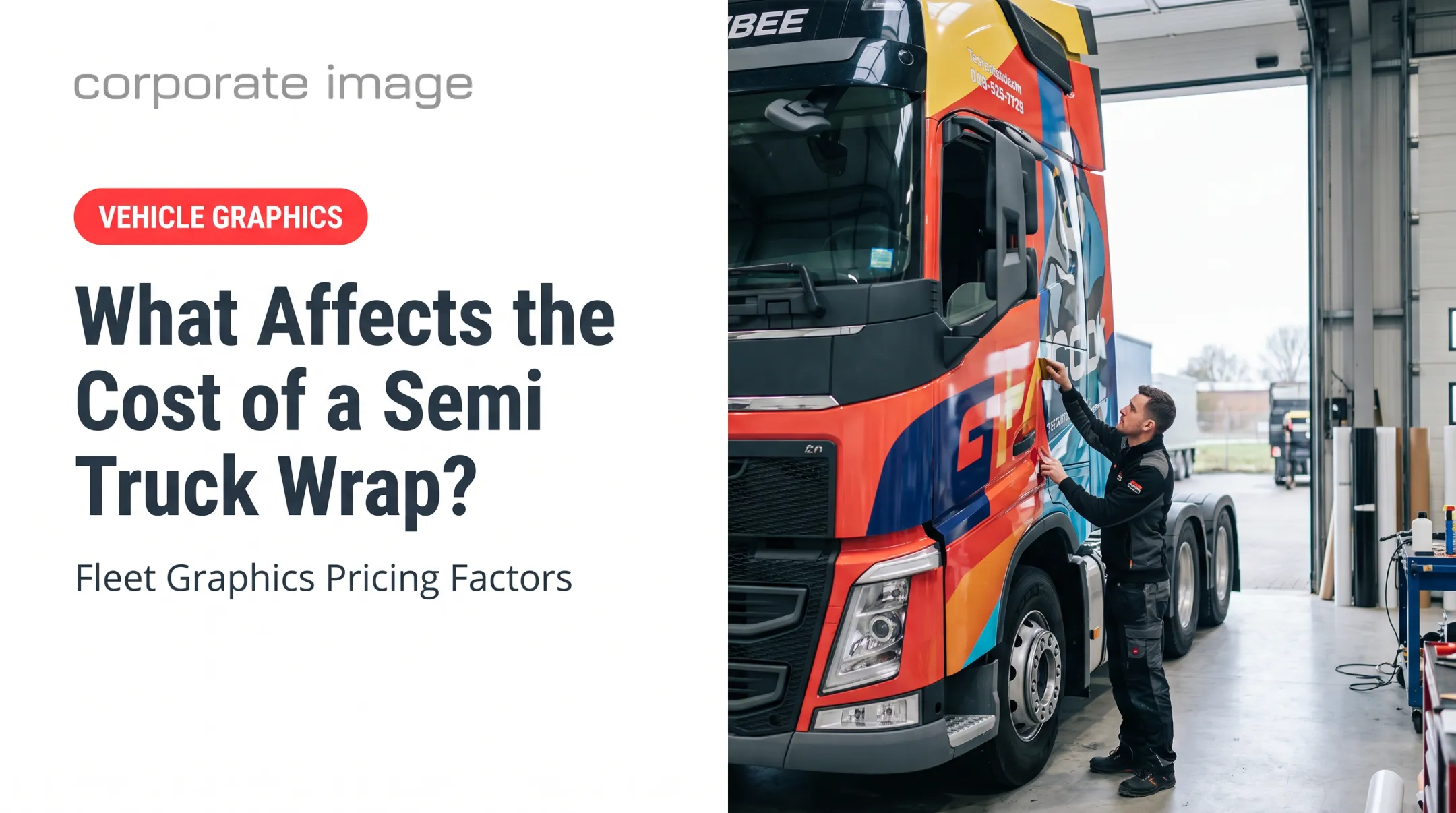
This guide covers wrap formats, roofing-specific design choices, materials, installation, maintenance and fleet planning. Corporate Image, a Salt Lake City graphics company with over 30 years of experience, contributes practical notes along the way.
Key Takeaways
- The right format depends on the vehicle, budget, coverage goals and fleet size.
- Company name, logo, phone number, service focus and one call to action beat decoration.
- Film choice, surface prep and installation drive appearance, durability and future maintenance.
Why Roofing Companies Use Wrapped Trucks and Vehicles
Roofing crews park in front of the very homes and buildings where neighbors may soon need work. A branded truck reaches nearby homeowners, passing drivers, pedestrians and property managers while the crew is on site.
Consistent branding also signals professionalism. 3M states that commercial vehicle graphics can support brand recognition and credibility. That is a manufacturer's statement, not a controlled trust study.
Be cautious with big numbers. Popular claims, such as a 97% recall rate for mobile ads, often circulate without a publication date or methodology. The American Trucking Association comparison is similar: 3M's page cites older research (2003 and 2019) without disclosing samples or methods.
What you can say honestly:
- A wrap keeps your name visible every day the truck is out.
- It makes a crew look organized and established.
- It does not guarantee leads or sales. The phone number, the work and your reputation do that.
Choose Full Wraps, Partial Wraps, Lettering, or Decals
3M separates spot graphics and cut lettering, partial wraps (typically at least one-third coverage), and full wraps. Coverage, film and installation all affect price, so compare scope rather than hunting for one universal number.
| Format | Coverage | Impact | Best roofing use |
|---|---|---|---|
| Full wrap | Most or all panels | Highest | Flagship truck, unified brand |
| Partial wrap | At least one-third (3M's description) | High | Doors, bed, tailgate with paint as background |
| Lettering | Name, phone, services | Moderate | New trucks, trailers, tight budgets |
| Decals/spot graphics | Logo or small panels | Low to moderate | Equipment vehicles, quick fleet consistency |
Full Wraps
A full wrap suits the truck that customers see most, or a company investing in a unified brand. It treats every panel as one design and offers the most flexibility. It also costs the most and depends on sound paint underneath.
Partial Wraps
A partial wrap concentrates graphics on cab doors, bed sides, rear doors or the tailgate. Your existing paint color becomes part of the design. 3M describes this format as a cost-effective branding option.
Lettering and Decals
Cut lettering and decals cover the essentials: name, phone number, services and any required identifiers. They work well on new vehicles, trailers and budget-sensitive fleets, and 3M describes them as quick to install and remove.
Match format to the vehicle, too:
- Pickups and vans: partial wraps or lettering usually carry the message.
- Box trucks: large flat sides support big logos and service lists.
- Trailers: stationary at jobsites, so even simple graphics work hard.
- Equipment vehicles: lettering and decals are often enough.
Decision Checklist
- Budget and number of vehicles
- Expected vehicle lifespan
- Paint condition
- How often the vehicle is on the road or on site
- Desired brand impact
Design Roofing Vehicle Wraps That Get Noticed and Generate Leads
Build a Clear Hierarchy
Rank information in this order:
- Company name and logo
- Primary contact method
- Service category or specialty
- Trust signals, only where they stay readable
Keep messaging short: inspections, repairs, replacement, residential or commercial roofing, storm-damage services. List only what you actually offer.
Make One Call to Action Count
"Call for a free inspection" or a single web address works. Several phone numbers, social handles, QR codes and long service lists compete with each other, and none gets read. A Sunroc box-truck graphic shows the idea: a big brand, a short service list, one number and one website.
Design for Distance and Real Vehicles
Use high contrast, large type and generous spacing. Put key information on uninterrupted panels. Federal rules for regulated commercial vehicles call for markings readable from 50 feet in daylight while stationary. That is a compliance standard, not a moving-ad guarantee, and it doesn't set a universal letter height.

Plan around the truck itself:
- Ladder racks, toolboxes and headache racks
- Wheel wells, door handles and fuel doors
- Cameras, lights, trim and windows
- Tailgate seams and panel breaks
Approve the proof against your exact make, model and configuration so the phone number never splits across a handle or gap.
Use Trust Signals Carefully
Licensing language varies by state:
- California: business name and license number on each commercial vehicle (72-point or 3/4-inch letters); bonded claims prohibited
- Oregon: "CCB" plus license number on signed business vehicles; "Licensed and bonded" allowed
- Florida: registration number on vehicles that show the contractor's name
- Federal (10,001 lb+): USDOT number may also be required
Check your state's current rules before publishing, and include only accurate claims such as years in business, manufacturer certifications or warranties.
Materials, Installation, Durability, and Maintenance
Choosing Film and Finish
Vehicle size, body contours, paint condition, sun exposure, weather, washing habits and jobsite use all shape material choice. Use current manufacturer specifications, not generic lifespan claims.
Warranty terms show why. For one 3M film (IJ280) in Zone 2, which covers most of the US except the desert southwest, a printed graphic with approved protection carries 7 years vertical coverage but only 1 to 2 years non-vertical.
Roofs and hoods face that horizontal sun, so side and roof panels shouldn't be assumed to last equally. Warranty periods are not expected lifespans.
Preparation and Installation
Installers should inspect before any film goes on:
- Clean the surface and remove residue
- Test paint adhesion
- Address rust, dents and peeling clear coat
- Flag recent repaint areas, since under-cured paint can outgas and hurt adhesion
Professional installation matters most on curved panels, seams, rivets and door edges. 3M's own bulletin sets different application temperature ranges for flat, riveted and compound-curve surfaces.
Maintenance
3M's maintenance guidance calls for a nonabrasive, solvent-free cleaner (pH 3 to 11). Pressure washing should stay at or below 1,200 psi, with the nozzle at least 12 inches away. Brushes can catch loose edges, so keep care simple:

- Hand wash where appropriate
- Skip abrasive tools and harsh chemicals
- Check edges regularly
- Photograph damage early so individual panels can be repaired or replaced
Removal and Resale
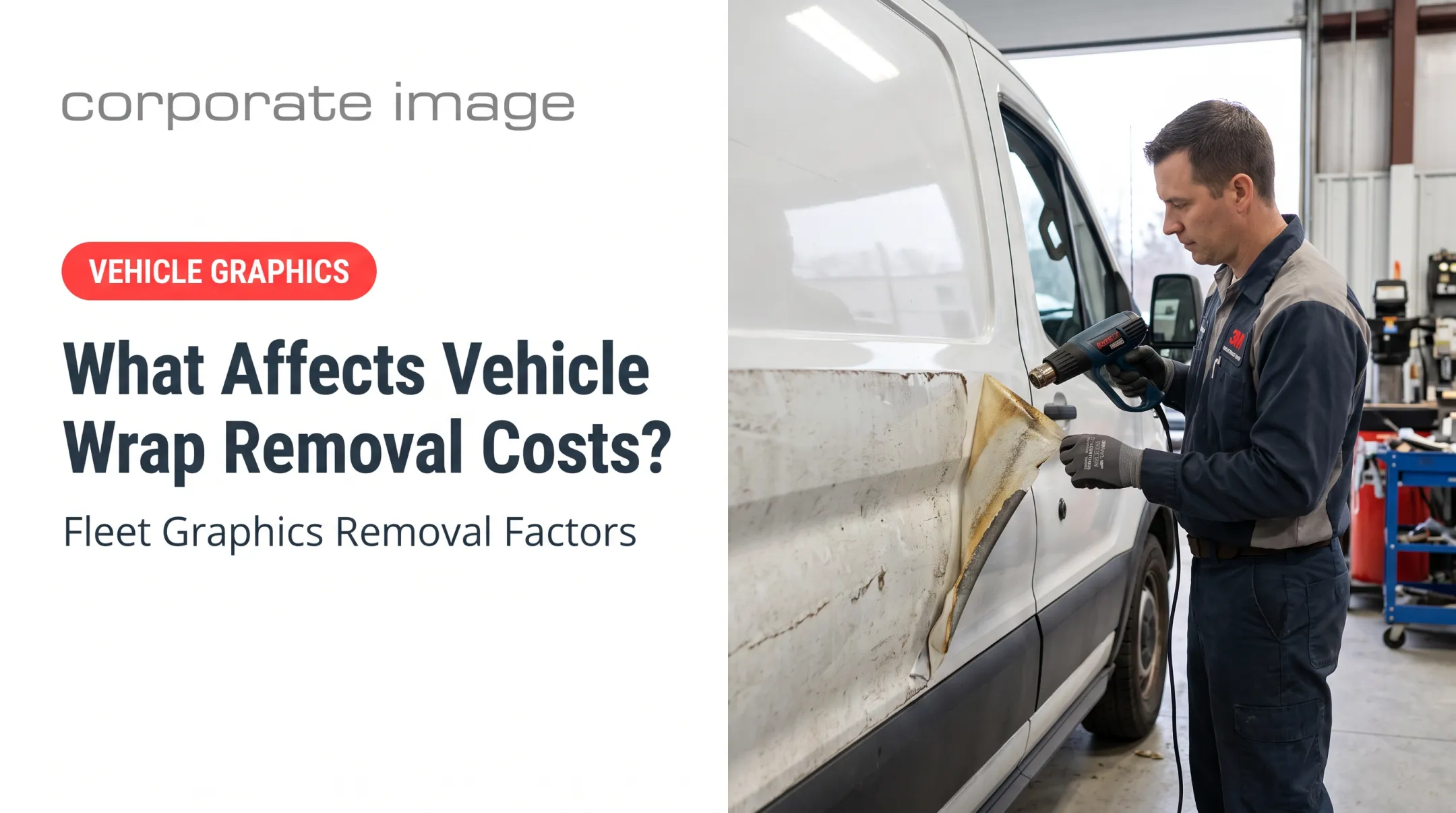
Heat helps removal, but residue can remain, and 3M doesn't warrant paint or clear-coat damage during removal. If you plan to resell the truck or rebrand soon, discuss film, adhesive, coverage and schedule up front.
Where Corporate Image Fits
Corporate Image handles design, production and installation under one roof. With over 30 years of graphics experience and a factory-direct relationship with 3M materials, it holds 3M Certified Graphics Installation Company and 3M Preferred Graphics Installer credentials.
It recommends screen-printed graphics for maximum durability and offers digital printing for short runs.
Plan a Consistent Roofing Fleet Wrap Program
Phase the Rollout
- Start with consistent lettering or decals on every vehicle.
- Prioritize the most visible service trucks.
- Expand to partial or full wraps on more trucks, vans, trailers and equipment.
Write a Fleet Style Guide
A style guide locks in logo treatment, colors, fonts, service language, phone number and call to action. Layouts can still differ by vehicle. A van and a flatbed trailer don't need identical artwork, just the same recognizable system.

3M's fleet guide also recommends reviewing proofs before full production and coordinating installation logistics to limit downtime.
Project-Planning Checklist
Gather these before requesting a quote:
- Photos of each vehicle, plus make, model and dimensions
- Existing damage and accessories
- Desired coverage and brand assets (send art files for review)
- Required markings, such as license numbers
- Installation location, acceptable downtime and target completion date
Ready to scope a project? Call Corporate Image at 801-485-0103 or use the website contact form for a project-specific consultation.
Frequently Asked Questions
How much does it cost to wrap a truck roof?
Cost depends on whether you need the roof panel only or a full roofing-company wrap. Vehicle size, coverage, film, design complexity, surface prep and installation all affect the quote.
Is it cheaper to wrap a truck or paint it?
Neither option is always cheaper. Weigh scope, finish, downtime, branding flexibility, reversibility, paint condition and how long you'll keep the vehicle.
How long do roof wraps last?
A roof-panel application faces more direct sun than a side panel, so it typically has shorter warranty coverage than a full wrap's vertical surfaces. Material, climate, washing, installation quality and manufacturer guidance all affect lifespan.
What information should be on a roofing company truck?
Include the company name, logo, one readable phone number or website, your primary service and one call to action. Add licensing, insurance or certification details only if accurate and legally appropriate in your state.
Should I wrap my roofing trailer too?
Yes, often. Trailers sit at jobsites as stationary branding, so lettering or full graphics both work. Consider towing visibility, durability and consistency with the truck.
How long does it take to install roofing truck graphics?
Timing depends on design approval, vehicle prep, coverage, condition, complexity and vehicle count. Confirm the schedule with your installer before you commit.