The choice affects setup cost, per-unit price, turnaround, artwork flexibility, outdoor performance, and reorders. Pick wrong and you either overpay for tooling on a small job or overpay per piece on a big one.
Both methods are well established. In FESPA's 2023 census, 70% of graphics and signage respondents already owned wide-format printers. This guide covers cost, run size, durability, and the questions to ask a printer.
Key Takeaways
- Digital suits short runs, prototypes, changing artwork, and photographic detail.
- Screen printing gets cheaper per piece as identical runs grow.
- Compare total project cost, not just the per-piece price.
- Environment, substrate, and reorder pattern matter as much as quantity.
Digital vs. Screen Printing for Signs and Decals: Quick Comparison
| Factor | Digital | Screen |
|---|---|---|
| Setup | No screens or plates | Separation and screen per color |
| Best run size | Short, varied, changing | Large, identical, repeating |
| Color and detail | Photos, gradients, fine text | Bold spot colors, opacity, up to 6 colors |
| Ink deposit | Around 10 microns | Up to 200 microns |
| Reorders | Easy artwork changes | Economics improve with repeat business |
Cost and run size
Digital printing prints straight from a file, so there are no printing plates. That makes small quantities, prototypes, multiple versions, and variable-data decals practical. Ink coverage, material, finishing, and supplier pricing still shape the final quote.
Screen printing needs a positive and a prepared screen for each color. Those costs hit early, then spread across the run. At Corporate Image, digital unit pricing is generally flat whether you order 10 or 10,000, while screen cost per unit keeps falling as the run grows.

Setup and turnaround
Digital workflows go from file to print with little prepress, which helps when a sign is needed fast. Screen printing involves screen preparation, registration, ink application, drying or curing, and cleanup. Once the setup is done, production moves efficiently.
Design, durability, and substrates
- Digital: photographs, gradients, QR codes, serialized or location-specific artwork.
- Screen: opaque spot colors, hand-mixed brand color matches, and translucent colors for reflective materials.
- Outdoor life: depends on the ink system, substrate, cure, and protective finish, not the method label alone.
- Substrates: screen printing commonly runs on vinyl, poly plastic, and metal. Digital printers also handle contour cutting, but confirm limits for unusual surfaces.
What Is Digital Printing?
Digital printing transfers artwork from a file directly to the substrate without a separate screen per color. UV, solvent, and latex are specific technologies within that category. UV ink cures as it prints, and latex cures on the machine, according to Roland DG.
For sign and decal buyers, the value is flexibility:
- Change artwork between pieces or runs
- Proof easily before committing
- Order closer to actual demand instead of storing excess stock
- Print full-color images, gradients, small text, and QR codes
Readability still depends on viewing distance, resolution, substrate, and finishing.
Where the cost climbs
Digital quotes move with ink coverage, specialty media, white ink layers, contour cutting, laminate, mounting, shipping, and installation. Digital also deposits far less ink than screen printing, so it fits shorter runs or jobs where maximum durability is not the goal.
Use Cases of Digital Printing
Digital fits best where quantity is low or artwork keeps changing:
- Prototypes and one-off signs
- Short campaigns and seasonal resort graphics
- Storefront updates for retail and restaurant locations
- Fleet identification with unit numbers
- Multi-site corporate rollouts with location-specific versions
- Replacement decals
Corporate Image prints digitally for banners, signs, decals, labels, and vehicle wraps across fleets, ski resorts, government, and manufacturing. For ski signs, it can supply photo-quality digital prints alone or applied to sign material.
Short-run digital work shows up in other label programs too. Mimaki's Hatakeyama case describes specialized food labels ordered in batches of 200 to 300, printed by inkjet. That example illustrates low volume; it is not a cost comparison with screen printing.
What Is Screen Printing?
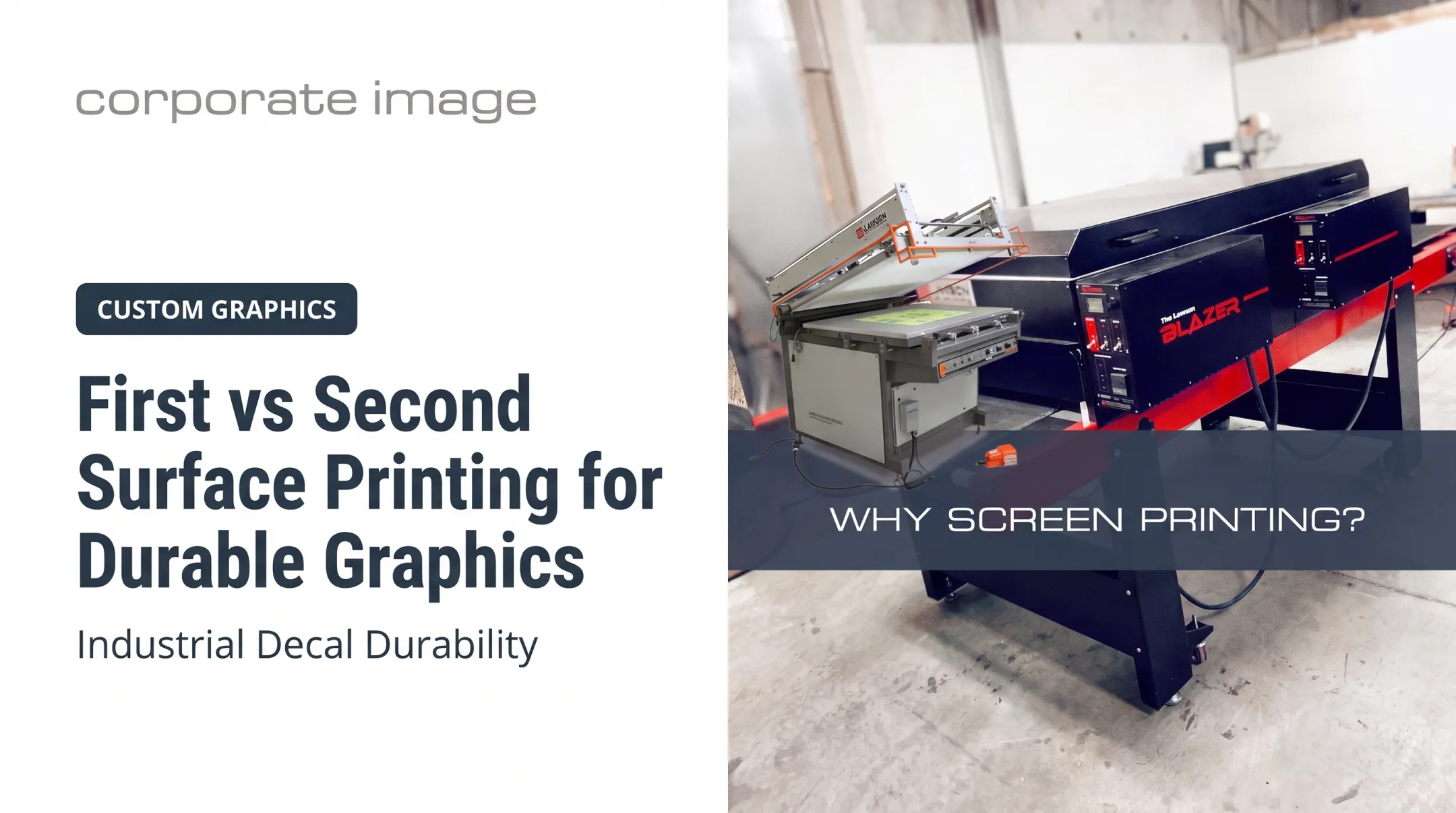
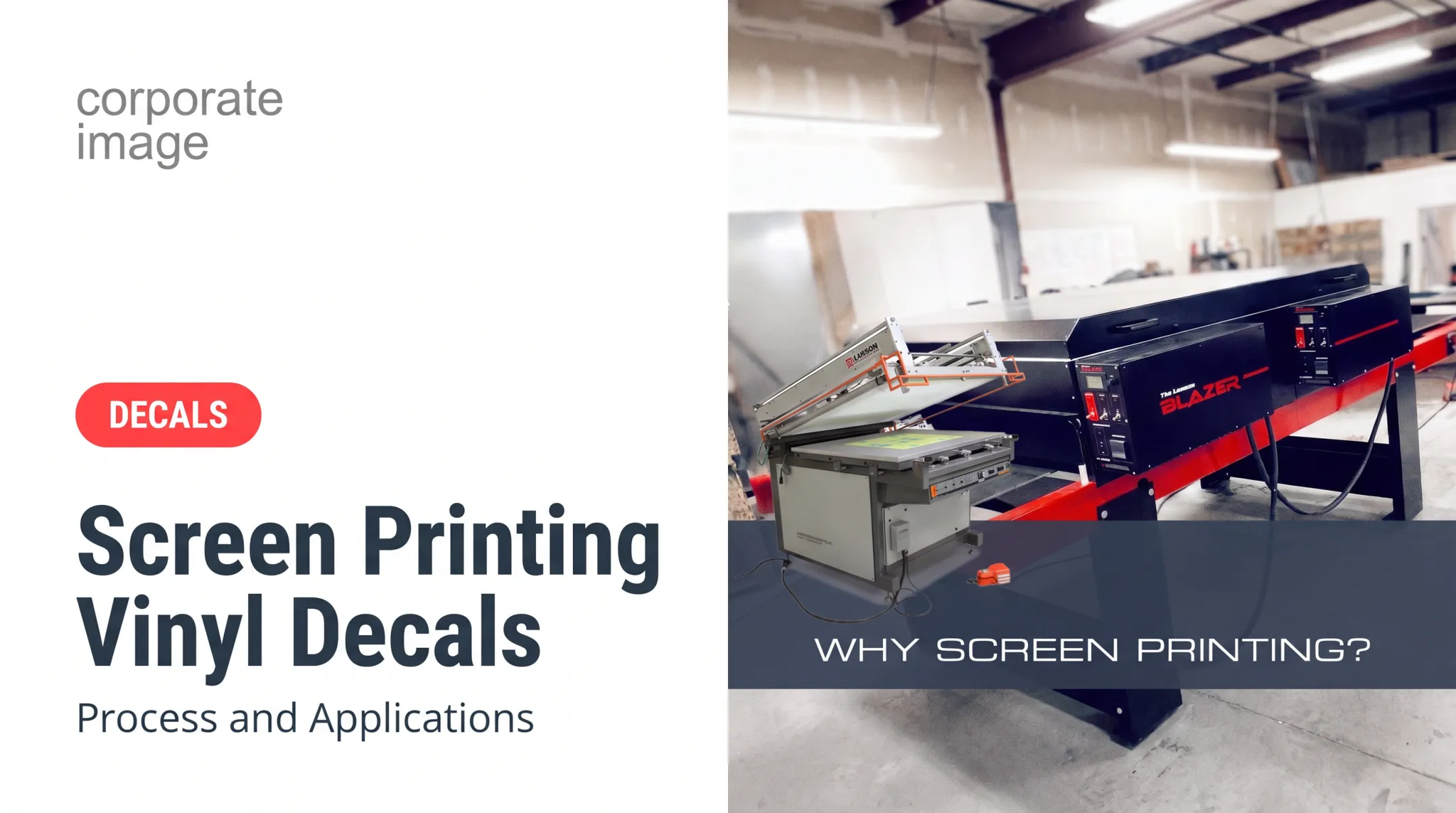
Screen printing is stencil-based. Ink is forced through a mesh screen onto the substrate, with separate screens or passes for each color. Registration, ink choice, curing, and surface preparation all affect the result.
It works well for repeatable artwork, bold spot colors, and high-opacity coverage. A stable design and planned run improve repeatability and unit economics for recurring labels, equipment graphics, and safety markings.
Strengths and trade-offs
Strengths:
- Opaque, precisely matched brand colors (Corporate Image hand-mixes its inks)
- Up to 6-color images and halftones
- Heavy ink deposit, up to 200 microns versus around 10 for digital
- Liquid UV clear coats, which Corporate Image applies faster and cheaper than solid laminate on long runs
Trade-offs:
- Color separations, positives, and screens raise the cost of small orders
- Make-ready waste and registration add time
- Later design changes mean new screens
- It cannot match digital's picture-quality detail
Confirm that the chosen ink and substrate suit the application before approving production.
Use Cases of Screen Printing
Screen printing fits large, stable, repeating programs:
- Large quantities of the same decal
- Recurring equipment labels and industrial graphics
- Bold safety markings
- Outdoor ski trail signs on treated poly plastic
- Repeat sign programs with predictable demand
Corporate Image can produce a 10,000-piece hard-hat decal order faster and cheaper by screen than by digital.
Outdoor and industrial jobs also depend on how long the ink holds up. Durability depends on the system. Nazdar's technical data estimates two years of vertical outdoor exposure for its 9700 solvent screen ink in the central US when properly cured.

Ink film thickness, cure, and formulation all affect that figure. Poor curing or preparation can still cause early failure.
Nazdar's Tec Color Craft case reports screen-printed aluminum decals on motorcycle mufflers, a heat-exposed application. Tec Color Craft's 1.5 billion stickers are a lifetime total, not a single run, so read that figure as proof of capability only.
Digital vs. Screen Printing: What Is Better for Signs and Decals?
There is no universal winner. Weigh quantity, number of versions, artwork complexity, color needs, substrate, environment, deadline, reorder pattern, and finishing.
Cost and run-size decision
Choose digital when the order is small, designs vary, artwork may change, or avoiding setup charges matters more than the lowest unit price.
Choose screen when artwork is fixed, the order is large or recurring, and setup spreads across many identical pieces. No universal break-even quantity exists. Get quotes at your actual volumes.
Compare the full quote
Look past the piece price at setup, proofs, substrate, ink, cutting, laminate, mounting, packaging, freight, installation, and the cost of holding or replacing inventory.
Questions to ask any printer:
- What is the minimum order?
- What setup charges apply?
- Can designs vary within the run?
- What outdoor rating is documented for this ink and substrate?
- What finishing do you recommend?
- How are reorders priced?
Situational picks
- Digital: detailed graphics, photographs, variable data, prototypes, short campaigns, multiple site versions.
- Screen: stable artwork, bold spot colors, high opacity, specialty effects, large repeat runs.
A practical example
Two common jobs show the trade-off. A manufacturer needs 10,000 identical hard-hat decals each year. Screen printing spreads setup across the full run and wins on unit cost.
A regional retailer needs 40 window graphics with different store details. Digital wins because no screens are built for each version.

Many buyers have both situations. Corporate Image designs, prints by either method, and installs with 3M-certified installers, so one team can match each project to the right process. Contact Corporate Image to discuss quantity, substrate, exposure, finishing, and installation for your sign or decal program.
Conclusion
Digital printing is often the flexible choice for short, changing, or highly detailed programs. Screen printing can be the economical choice for larger, consistent, repeatable runs.
Run size alone does not decide it. Total cost also depends on:
- Substrate and outdoor exposure
- Finishing and installation
- Artwork changes and reorders
Evaluate all of these factors before you approve production.
Frequently Asked Questions
Is digital printing more expensive?
Not always. It often costs less for short or changing runs because setup is minimal. Screen printing usually wins on unit cost for large identical quantities. Substrate, ink coverage, finishing, and installation also affect the quote.
How is digital printing done?
A file is processed by RIP software and printed directly onto the substrate with controlled ink droplets. Depending on the job, contour cutting, curing, and protective laminate may follow.
How is screen printing done?
Artwork is separated by color, and a stencil screen is prepared for each. Ink is pushed through the mesh onto the substrate, repeated for each color, then cured or dried.
What is the difference between screen printing and digital printing?
Digital needs no screens, suits short runs and fine detail, and allows easy changes. Screen printing needs setup but delivers opaque color, heavy ink deposit, and lower unit cost on long runs.
Can digital printing be done on fabric?
Yes, on some fabrics. Mimaki describes direct sublimation onto pretreated polyester. Equipment, ink, pretreatment, and finishing depend on the textile, and fabric differs from rigid signs and adhesive decals.
Does digital printing last longer than screen printing?
Neither wins automatically. Life depends on the ink system, substrate, cure, laminate, installation, and exposure. Ask for documented specifications for your exact combination.