Fleet owners and marketing teams worry about the same things: fading, peeling, downtime, and mismatched branding when one truck needs replacing and the rest don't. Multiply that across a fleet and the cost adds up quickly.
This guide covers realistic lifespan expectations, the factors that shorten or extend wrap life, care practices, repair-or-replace decisions, and how wrapping compares with paint.
Key Takeaways
- Wrap life depends on the whole system: film, ink, overlaminate, adhesive, prep, and installation.
- Mileage, outdoor storage, weather, harsh washing, and chemicals shorten useful life.
- Regular cleaning and early repairs keep small failures from spreading.
- Replace a wrap when it no longer represents your brand, even if it's still stuck on.
How Long Do Commercial Vehicle Wraps Last?
Manufacturers publish durability figures for specific finished constructions, not for "vinyl" in general. That distinction matters.
- Avery Dennison lists 5 years vertical and 3 years horizontal for MPI 1105 with DOL 6460 overlaminate on specified Epson equipment with GS3 ink (expected durability only).
- ORAFOL rates laminated ORAJET 3951RA at 7, 5, or 3 years across Climate Zones 1, 2, and 3; ORAJET 3551RA at 6, 4, or 2 years.

Those figures come from different manufacturers' systems, so don't blend them into one range. Note too that horizontal surfaces like hoods and roofs take more sun than doors and sides, and carry shorter ratings.
Attached Isn't the Same as Effective
Three things get confused:
- Physical adhesion: the film is still stuck to the vehicle.
- Visual appearance: colors are intact, with no cracking or heavy scratching.
- Practical branding life: the wrap still presents your company consistently.
A wrap can pass the first test and fail the other two. Faded reds beside a freshly wrapped truck make a fleet look disorganized.
Warranty Terms Have Limits
Warranties cover product defects and specified processing failures, not normal weathering. Avery's ICS Performance Guarantee excludes misuse, neglect, improper processing, and chemical or mechanical damage. It also requires written claim notice within 14 days of discovering a problem, plus installation records.
3M's MCS coverage depends on approved film, ink, and printer combinations, and on the graphics manufacturer's MCS certification.
Why Fleet Vehicles Wear Faster
Fleet vehicles log more miles than personal vehicles. They collect road debris, get washed often, get loaded and unloaded, and sit outside longer. Expect shorter real-world life than a garaged vehicle.
How much of the vehicle you wrap also affects wear, though no manufacturer publishes a coverage-only comparison of full wraps, partial wraps, and lettering. Construction, panel geometry, and exposure drive the differences. Box trucks and trailers with rivets, for example, call for different film choices than a van with deep contours.
What Factors Affect How Long Commercial Vehicle Wraps Last?
Film, Ink, and Overlaminate
The film, ink, and protective laminate work as one system. Avery states that cast films suit contoured surfaces, while calendered films retain memory of their original shape and can shrink when heated and stretched.
3M describes its 8518 overlaminate as providing long-term UV and physical protection, including resistance to fuel vapors (wraps still need proper care).
Ink drying matters too. ORAFOL calls for at least 24 hours of drying for solvent-based inks, with 48 to 72 hours preferred, before laminating or further processing.
A practical rule: use premium cast film for complex curves and long-term branding. Simpler flat surfaces or shorter campaigns may suit a different commercial film.
Corporate Image can supply digitally printed materials for short runs or when maximum durability isn't the goal. It uses 3M vinyls and inks through a factory-direct relationship with 3M.
Installation and Surface Preparation
Surface problems cause adhesion failures. Before any film goes on:
- Repair rust, chips, dents, and paint failure.
- Remove wax, grease, and other contaminants. 3M warns that car wax can reduce adhesion.
- Make sure the surface is completely dry, including seams and crevices.
- Respect application temperatures. 3M cites 60 to 90°F as general best practice.
Installers also handle seams, recesses, rivets, and door edges, then post-heat stretched areas to lock the film in place. Skipped steps show up later as lifting, bubbling, or shrinkage.
Credentials differ, so read them closely. 3M recognizes Certified Graphics Installation Companies (company-level, with an on-site audit) and Preferred Graphics Installers (individual, specialty-specific). Corporate Image is both a 3M Certified Graphics Installation Company and a 3M Preferred Graphics Installer, with design, production, and installation under one roof.
Vehicle Use and Environment
Heat, humidity, industrial pollution, and airborne particles can reduce durability, according to Avery's ICS terms. Fuel, bird droppings, tree sap, and tar can stain or damage film if left in place.
High-mileage routes, construction and off-road trucks, outdoor-parked vehicles, and frequently loaded units need closer inspection than a lightly used service van.
Design and Vehicle Details
These details tend to show wear sooner:
- Dark or highly saturated colors and specialty finishes
- Deep recesses, sharp body lines, and high-contact areas
Paint condition, body material, and panel size should shape the design and film choice from the start.
How to Make a Commercial Vehicle Wrap Last Longer
Use a Wrap-Safe Cleaning Routine
Follow the film manufacturer's instructions. Avery suggests cleaning a wrap every two weeks. That's one manufacturer's guidance, not a universal rule.
- Pre-rinse with clean water, then hand wash with mild soap (Avery specifies pH 5 to 9) and a soft cloth or sponge.
- Dry thoroughly with a non-abrasive cloth.
- Choose brushless, spray-only automatic washes. Skip brush washes and automatic wax.
- Avoid acetone, MEK, toluene, thinners, and waxes containing petroleum distillates or abrasives.
- Wipe fuel, oil, bird droppings, sap, and salt off promptly.
Limit Exposure Where You Can
Covered or shaded parking reduces sun and weather exposure. Many commercial vehicles have to stay outside, so match the film and laminate to your actual climate and storage conditions. Not every wrap has the same durability.
Protect Edges and Seams
Pressure washers are the biggest risk. Water forced under the film causes lifting. The two manufacturers' limits differ:
| Spec | 3M | Avery Dennison |
|---|---|---|
| Max pressure | 1,200 psi | Below 1,200 psi |
| Water temperature | 140°F max | Below 180°F |
| Spray fan | 40° or wider | 40° |
| Distance | 12 inches or more | 12 inches from edges |

Follow your film's bulletin, not a blend. Keep nozzles away from seams, door gaps, and damaged areas. Also watch for ladder contact, tools, loading equipment, branches, and low-clearance structures.
Inspect and Repair Early
Check high-wear areas during routine vehicle inspections. Look for:
- Lifting edges and bubbles
- Cracking, fading, tears, or scratches
- Exposed adhesive
3M specifically says to inspect graphics after washing for edge lifting. Prompt professional repair can stop damage from spreading.
Track the Fleet
Keep records of:
- Installation dates and film specifications
- Vehicle assignments
- Damage, cleaning, and repairs
That lets managers schedule replacement before branding turns inconsistent. Ask your installer or film manufacturer for an inspection cadence rather than guessing at one.
When Should You Repair or Replace a Commercial Vehicle Wrap?
Signs a Wrap Needs Attention
Watch for these warning signs:
- Significant fading, cracking, or bubbling
- Edge lifting, seam failure, or shrinking
- Deep scratches, tears, or adhesive failure
Lifting edges and tears get worse if ignored, since dirt and water work underneath.
Then judge the scope. Is it one panel, one decal, a key brand element, or enough of the vehicle to justify a full replacement?
Repair or Replace?
Small, localized damage is often fixable. A loose edge can be trimmed back to firmly adhered film and sealed with edge-sealing tape or sealer, following 3M's procedure.
Weathered graphics are harder. 3M states that outdoor-weathered graphics can't be repaired to their original state, and visible differences are likely. A new panel next to a faded one can look worse than the damage. 3M recommends replacing complete components or the whole wrap for vehicle-wrap maintenance.
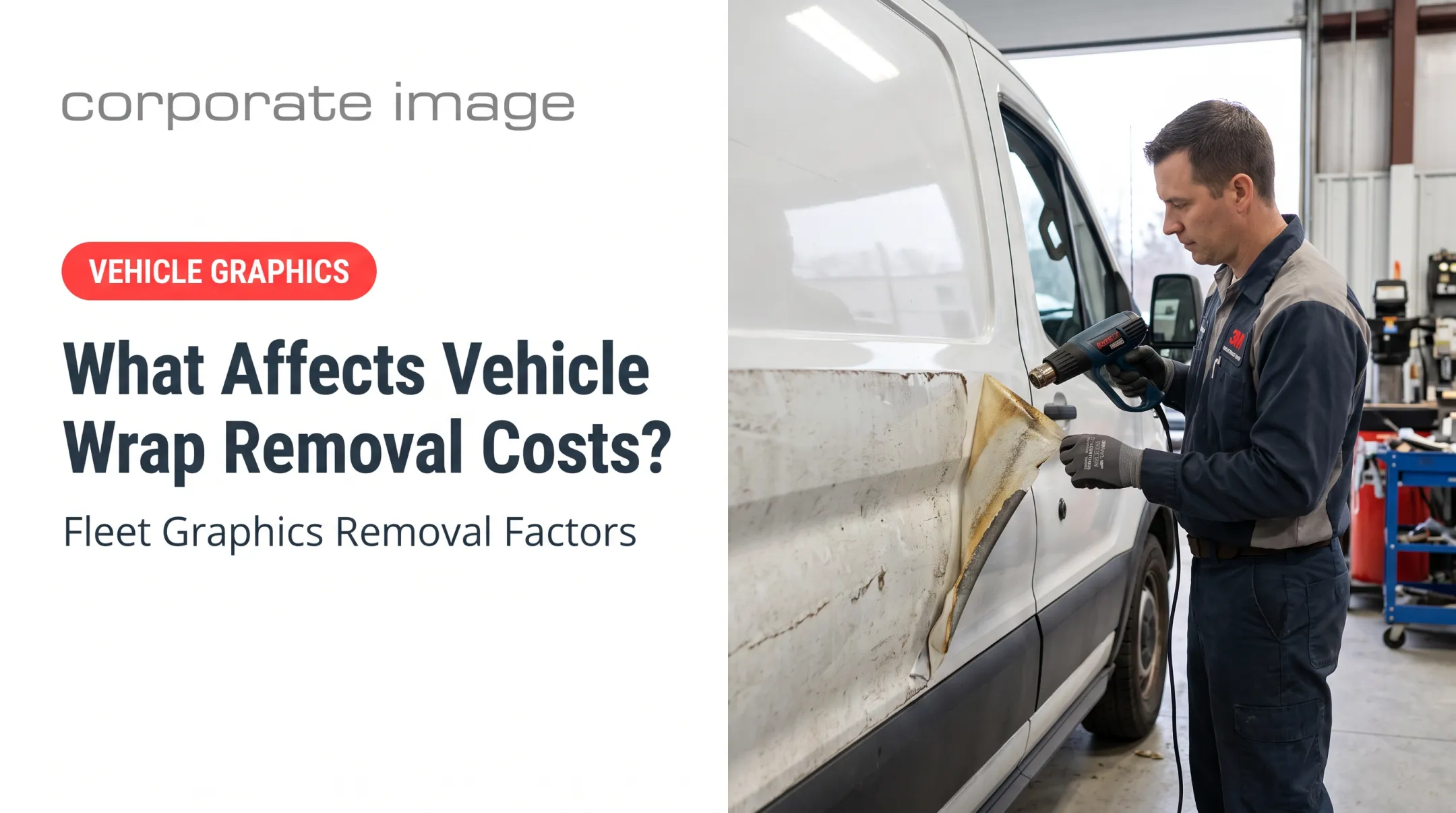
Get a professional assessment before removal, especially with damaged paint, aged adhesive, rust, or previous wrap layers. Aged film turns brittle and its adhesion increases, so removal gets harder and residue may remain.
Wrap Versus Paint
Be wary of anyone claiming a universal cost winner between commercial wraps and paint. Compare total cost:
- Vehicle size and surface preparation
- Material, production, and labor (installers may charge hourly or by square foot)
- Design changes
- Downtime, including unplanned replacement
- Removal and future rebranding
Wraps suit businesses that want removable, changeable branding. Paint fits permanent color changes or bodywork requirements. Avery notes that graphics remove cleanly from undamaged OEM-prepared paint, but chipped paint, rust, and non-OEM repainting raise risk.

Conclusion: Planning for a Longer-Lasting Commercial Vehicle Wrap
The most dependable lifespan comes from four practices:
- Match film and laminate to the vehicle's use
- Prepare the surface correctly
- Use professional installation
- Follow a consistent care plan
Corporate Image, a Salt Lake City company with over 30 years of experience, designs, prints, and installs fleet graphics using 3M materials and 3M-certified installers.
Fleet owners can consult the team on design, production, installation, inspection, or replacement planning. Call 801-485-0103 for an estimate.
Frequently Asked Questions
Are vehicle wraps durable?
Yes, commercial wraps are built for outdoor use. Durability still depends on film quality, installation, vehicle exposure, and maintenance.
Is it cheaper to vinyl wrap a car or paint?
It depends on vehicle size, paint prep, design complexity, labor, downtime, reversibility, and how long the branding must stay unchanged. Compare total cost, not just the headline price.
How long does a commercial vehicle wrap last?
Published ratings are system-specific. One Avery construction lists 5 years vertical and 3 years horizontal, while ORAFOL zone ratings run from 2 to 7 years. Heavy use or poor care can shorten that.
How should I clean a commercial vehicle wrap?
Hand wash with mild, wrap-safe soap and a soft cloth, then dry thoroughly. Remove fuel and contaminants promptly, and avoid abrasive brushes and misused pressure washers.
Can a damaged commercial vehicle wrap be repaired?
Localized damage like a loose edge or small tear may be repairable. Fading, extensive peeling, or unavailable matching film often means replacing a panel or the full wrap.
Does a vehicle wrap protect the original paint?
A properly installed and maintained wrap can shield paint from normal environmental exposure. Existing paint damage and improper removal can still affect the result, and no manufacturer guarantees damage-free removal.