Introduction
A storefront sign is often the first physical contact a customer has with your business. A unique design shouldn't just look unusual. It should communicate your brand, stay readable, and give people a reason to walk in.
The stakes are real. A Harris Poll survey of 2,007 US adults found 84% say signage affects purchase decisions, and 39% have entered a business solely because of its sign. Yet 75% said chaotic or hard-to-read signs make a business look less credible.
This guide covers creative exterior and interior ideas, current trends, and the practical criteria that matter: location, viewing distance, materials, lighting, durability, accessibility, and local rules.
Key Takeaways
- Pair one memorable visual feature with a clear name, offer, or direction.
- Pick a format based on goal, viewing distance, lighting, and how often the message changes.
- Keep exterior, window, interior, and wayfinding signs consistent.
- Settle durability, accessibility, permits, and installation before locking the concept.
Unique Store Sign Ideas That Help Businesses Stand Out
Dimensional Signs and Raised Lettering
Three-dimensional logos, raised letters, layered acrylic, and metal add depth and give a storefront a focal point. Boutiques often use brushed-metal letters, restaurants favor layered logos, and service brands use raised marks on a clean wall.
Terminology helps when you brief a fabricator:
- Open-face channel letters: no front face
- Internally illuminated letters: translucent face
- Reverse-channel letters: halo of light cast onto the wall
Illuminated Storefront Signs
Channel letters, light boxes, backlit logos, and neon-style LED signs keep a business visible after dark. One Texas retailer's refresh paired blue acrylic with opaque white vinyl for a faux-neon look, with white LEDs lighting the cabinet.
- Permanent illumination suits your main business identity.
- Promotional lighting suits short campaigns and events.
Control glare, color, and contrast so the name stays legible.
Window, Wall, and Floor Graphics
Unused glass, walls, and floors are branded real estate. Use them for launches, seasonal promotions, privacy, storytelling, and directional cues.
A good example is Evereve's storefront, where full-width window graphics combined fashion imagery, "DRESS LIKE A MUM," "EVEREVE OPENING THIS FALL!," and hiring information.
Those graphics only last when the film matches the surface. Corporate Image uses 3M materials rated for porous brick, low-adhesion plastic, and glossy finishes.
Blade, Projecting, Sidewalk, and Freestanding Signs
Signs that reach toward pedestrians help when a storefront is recessed or sits in a shopping center. A projecting sign mounts perpendicular to the facade, so people walking up the street see it before they reach your door. A sidewalk A-frame sits at street level.
Keep these short: a name, a symbol, and one call to action.
Custom Shapes, Murals, and Experiential Signage
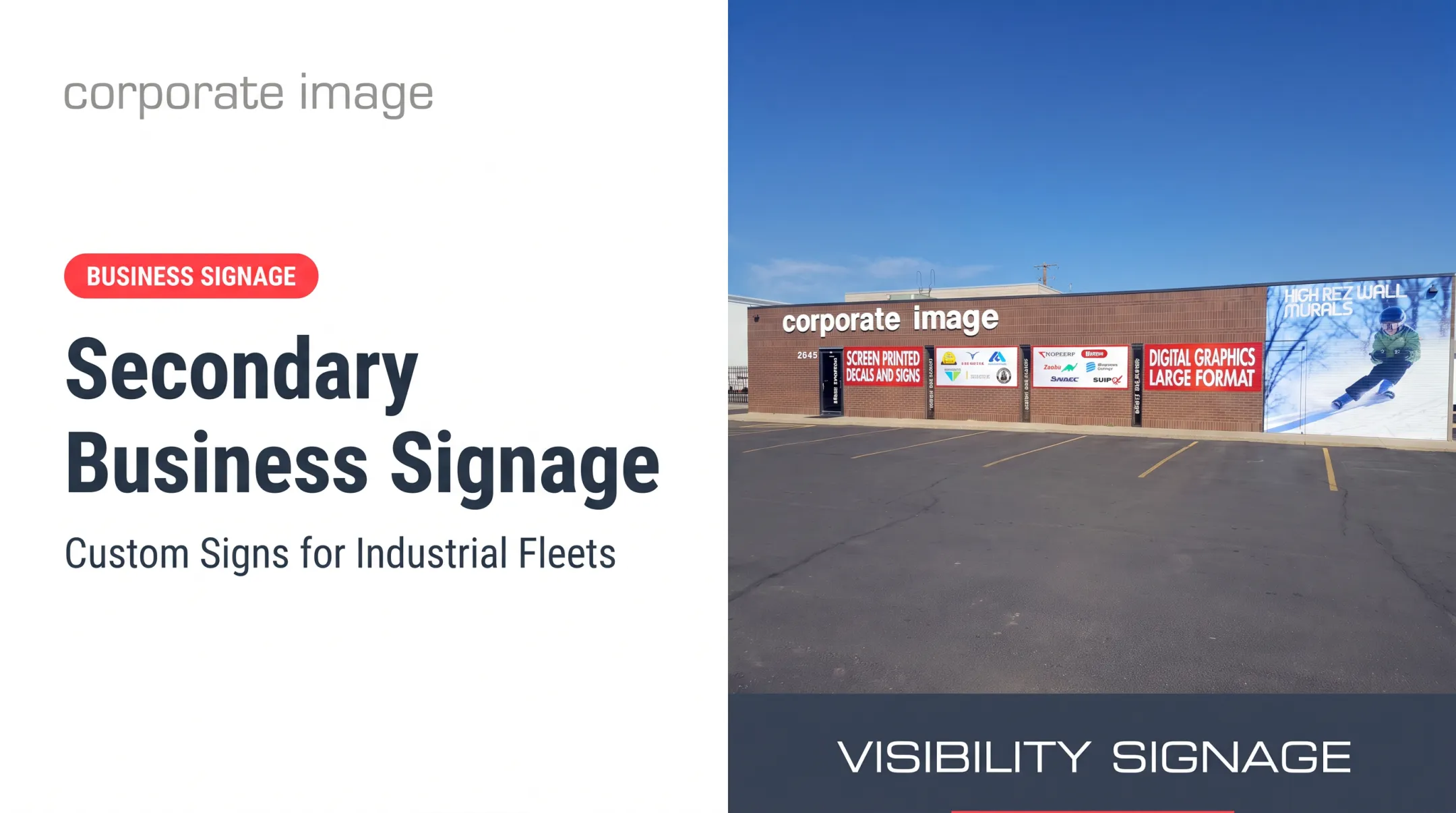
Product-shaped silhouettes, murals, photo backdrops, and sculptural lettering turn a sign into a destination. High-resolution murals, like a large skier mural on a wall, can anchor an entire space.
One rule: the creative element must reinforce the brand, never bury the business name or offer.

Modern Signage Trends to Consider
Digital and Interactive Store Signage
Screens, menu boards, kiosks, and QR-linked content suit businesses that change messages often. A Grocery TV survey of more than 1,000 shoppers reported that 62% had bought a product after seeing it advertised on an in-store screen, though the study was produced with a screen-network company.
Digital delivers flexibility and connectivity, but it also means ongoing content updates. It earns its place when promotions rotate weekly, not when a static sign would do.
Modular and Seasonal Signage Systems
Flexible systems typically include:
- Interchangeable panels
- Reusable frames
- Campaign inserts
These let you refresh messaging without replacing the whole system. Retailers also use modular backdrops and removable 3M vinyl on brick so graphics come down cleanly when strategy changes.
Sustainable Materials and Reusable Graphics
Look for recycled substrates, water-based inks, and reusable structures. Some products carry specific certifications, such as GREENGUARD Gold for certain non-PVC films and latex inks.
Be skeptical of vague claims. FTC guidance warns against broad terms like "green" or "eco-friendly." Weigh any claim against lifespan, maintenance, and disposal.
Minimal, High-Contrast, and Brand-Led Designs
Restrained layouts, strong contrast, distinctive type, and one clear message work best for quick or distant viewing. Use brand colors and assets consistently. Smith's Marketplace signs show it: "Welcome! We're glad you're here," "Open Every Day," "7:00 AM."
Personalized and Shareable Sign Experiences
Photo-worthy installations and location-specific messages invite social sharing. Keep them accessible, and mind privacy if personalization uses customer data. Never let novelty replace useful information like hours or directions.

How to Choose the Right Sign for Your Store
Start With the Sign's Primary Business Goal
Decide what the sign must do first:
- Attract passersby
- Identify the location
- Promote an offer
- Guide customers inside
- Communicate safety information
- Reinforce the in-store brand
Evaluate Sightlines, Viewing Distance, and Lighting
Setbacks, traffic type, mounting height, nearby clutter, and nighttime conditions all shape size and contrast. The International Sign Association offers a rule of thumb of at least 1 inch of letter height per 25 feet of viewing distance. Treat it as guidance, not law.
Drivers need fewer words than pedestrians. Walk the approach at dusk before you finalize anything.
Match Materials and Construction to the Environment
Sun, moisture, wind, temperature swings, and heavy touch all wear signs differently. Check manufacturer data sheets for the exact product and zone, and separate "expected durability" from warranty.
- Vinyl films: manufacturer durability varies by color and exposure.
- Acrylic: suited to outdoor illuminated signs.
- Aluminum composite: common for flat panels.
- Graffiti-prone walls: a protective laminate guards vinyl from UV and makes graffiti easy to remove.
Build a Coordinated Signage System
Your main sign, window graphics, entrance signs, wall and floor graphics, and wayfinding should share colors, typography, logo treatment, and tone. Customers should feel one brand from sidewalk to checkout.
Balance Permanent, Temporary, Static, and Digital Options
| Factor | Permanent static | Temporary/modular | Digital |
|---|---|---|---|
| Upfront cost | Moderate to high | Low to moderate | Highest |
| Message flexibility | Low | Medium | High |
| Maintenance | Low | Moderate | Ongoing |
| Power needs | Optional | None | Required |
No type wins everywhere. Frequent campaigns favor modular or digital; a core identity favors permanent.
Design Rules for Creative, Readable Store Signage
Create a Clear Visual Hierarchy
The name or main message gets seen first, supporting details second. Use short copy, strong contrast, legible type, and generous spacing. With 79% of surveyed consumers saying too many signs cause confusion, restraint pays.
Make Creativity Support the Brand
Color, shape, texture, and lighting should express a personality, whether premium, playful, artisanal, or practical, and match your wider identity. A quirky shape on a luxury brand confuses people.
Design for the Customer Journey
- Exterior signs attract attention.
- Entrance signs welcome.
- Interior signs guide decisions.
- Point-of-sale signs prompt action.
Test layouts with mockups, such as printed scale versions or temporary tape-ups, before production.
Durability, Compliance, and Production Planning
Check Accessibility, Permits, and Local Sign Rules
ADA rules apply to signs identifying permanent rooms and spaces. Those signs need:
- Raised characters with Braille
- Non-glare finishes
- Light-on-dark or dark-on-light contrast
Company names and logos are exempt, as are temporary signs used seven days or less.
Permits vary widely by city. Austin requires a permit for outdoor signs, Chicago requires one for many on-premise types, and New York City exempts some unilluminated signs of 6 square feet or less.
Illuminated signs also involve electrical code and UL listing. Confirm with your city and landlord before production.

Plan Installation and Maintenance Before Production
Settle these during design, not after:
- Site measurements and surface condition
- Mounting hardware and access equipment
- Weather exposure
- Cleaning and lighting checks
- Replacement graphics and safe removal
Substrate cleaning and preparation also affect film adhesion, so follow the manufacturer's bulletins.
Work With a Provider That Can Manage the Full Project
Corporate Image, based in Salt Lake City, designs, produces, and installs custom signs and graphics for retailers, restaurants, and commercial properties. With more than 30 years of experience, it holds 3M Certified Graphics Installation Company and 3M Preferred Graphics Installer credentials. If you're planning a project, reach out to talk through your ideas.
Frequently Asked Questions
What are some creative ideas for store signage?
Try dimensional lettering, illuminated signs, custom shapes, window and floor graphics, murals, blade signs, seasonal displays, and interactive experiences. Keep the message clear.
What are the modern signage trends?
Digital and interactive displays, modular seasonal systems, sustainable materials, high-contrast minimalism, LED lighting, and shareable experiential signage.
What makes a store sign unique?
Shape, material, lighting, message, placement, or interactivity can set a sign apart. It must stay recognizable and aligned with your brand.
What type of sign is best for a storefront?
It depends on sightlines, traffic type, viewing distance, lighting, local rules, budget, and whether the goal is identification, promotion, or wayfinding.
How do I choose materials for an outdoor store sign?
Consider sun, moisture, wind, temperature changes, surface condition, maintenance, lighting, and intended lifespan. Check each product's data sheet.
Do I need a permit for a store sign?
Often, yes. Requirements vary by city, zoning, property owner, sign type, size, lighting, and installation. Confirm with local authorities before production.